Monster Hunter Wilds: 10 Mistakes to Avoid
Ten Monster Hunter Wilds mistakes that quietly cost you rewards, damage and materials — each one checked against Capcom's own web manual.
Contents
First published against game version Ver.1.042.00.00.
The most expensive mistake in Monster Hunter Wilds is attacking a field monster before starting a Field Survey, because Capcom's own manual says you forfeit the quest reward entirely when you do. The second most expensive is capturing a monster on a Slaying Quest, which fails the quest outright. Neither of them announces itself, and both are easy to repeat for twenty hours. The ten below are the habits that quietly cost hunters rewards, damage and materials, each one checked against Capcom's documentation rather than against a feeling.
None of this is a skill problem. Wilds explains most of these systems exactly once, in a tutorial prompt, and then never brings them up again. If you want the positive version of the same list, our Monster Hunter Wilds beginner guide covers the twelve things worth knowing before your first hunt, and the rest of our coverage sits on the game hub.
1. Playing without Focus Mode
Focus Mode is not a targeting convenience, it is the game's main damage lever. Holding it aims your attacks and guards where the camera points and turns your scoutflies red over wounds and weak points. Capcom documents wounds in three stages — a Tear, then an Open Wound after further attacks, then a Scar once it is destroyed — and states that attacking a wound increases damage while a Focus Strike destroys it in one go (manual 3/4).
The official Focus Mode page adds the part that matters in a party: destroying a wound with a Focus Strike staggers the monster. Hunting without it is not playing badly, it is playing a version of Wilds with its best system switched off.
2. Hunting on an empty stomach
Meals grant temporary increases to health, stamina, attack “and other attributes”, plus Meal Skills (manual 9/3). The usual excuse is that you forgot before leaving camp, and it is not a real excuse: the Portable BBQ Grill is an Item Bar entry that works anywhere in the field, and the plain BBQ option produces a Well-done Steak that raises maximum stamina and restores health and stamina (official exploration page).
Nothing about a meal is a scarce resource being spent. It is a buff you are entitled to and repeatedly decline.
3. Hoarding Armor Spheres
Armor Spheres accumulate because upgrading armour feels like a decision and saving them feels like caution. It is not. Capcom's own list of ways to get stronger includes “Improve your armor” (manual 15/3), and the defence you are sitting on does nothing in your item box.
Fextralife documents where they come from — fused at the Smithy, farmed mainly through Optional Quests, with the Smelting Foundry unlocked after Chapter 2-4 adding another route. That farming detail is the wiki's rather than Capcom's, so treat the specifics as community documentation. The habit to change is not.
4. Never using the Seikret's second weapon
Capcom put it on the front of the official hunting page: “Your Seikret isn't just for travel—you can also stash an extra weapon in its weapon sling, allowing you to switch between two weapons of your choice.” A dedicated button swaps them, and pressing it on foot summons the Seikret automatically first (manual 11/2).
Most hunters finish the campaign having never loaded the second slot. The cost is a free mid-hunt change of discipline — a ranged option when the monster is in the air, a blunt option when you want a stun — that you were carrying the whole time. Our guide to all 14 weapon types is a reasonable place to pick a second.
5. Ignoring sharpness
Sharpness is melee-only and it punishes you twice over. Capcom: “While you can attack continually, this will eventually decrease the weapon's Sharpness Gauge, reducing the weapon's power and making it easier to deflect.” Deflected hits then drain the gauge faster, so the weapon that is already doing less damage starts losing sharpness quicker (manual 8/2).
The fix is nearly free, because you can sharpen while riding the Seikret. A hunter who whetstones on the way back from a fast-travel point never has this problem; one who waits for a safe opening in the fight always does.
6. Slotting decorations into the wrong pool
Weapon decorations and armor decorations are strictly separate pools and cannot be moved between them. Slots run from Lv1 to Lv3, and a higher-level decoration will not fit a lower-level slot (manual 8/5). You also equip exactly one talisman, not several.
This one is invisible while it is happening. You build a set around a skill, the skill never activates because the decoration went into the wrong pool or would not fit the slot you assumed it would, and the hunt just feels slightly worse than it should. Check the slot level before you assume the build is working.
7. Breaking a set bonus to chase one skill level
There are exactly two armour skill systems in Wilds, and they are not the same thing. Capcom: “Set Bonus Skills generally kick in when you equip all the pieces of the same armor set, while Group Skills kick in if your pieces of armor are based on similar materials.” (manual 8/4)
Game Rant fills in the thresholds — set bonuses at two and four pieces, group skills at three pieces sharing a material group, with no requirement that they come from the same set. Swapping a single piece to add one level of a skill routinely costs an entire bonus tier that was doing more work. Count what you are giving up before you count what you are gaining.
| Mistake | What it costs | Fix |
|---|---|---|
| Not using Focus Mode | Wound damage and the stagger from Focus Strikes | Hold the Focus Mode button; red scoutflies mark wounds |
| Hunting unfed | Temporary health, stamina, attack and Meal Skills | Use the Portable BBQ Grill in the field |
| Hoarding Armor Spheres | Flat defence you already own | Fuse them at the Smithy between hunts |
| Ignoring the Seikret's second weapon | A free mid-hunt discipline switch | Load a second weapon into the sling before you leave |
| Ignoring sharpness | Raw damage and more deflections | Whetstone, including while mounted |
| Wrong decoration pool | The skill you thought you equipped | Weapon and armor decorations are separate; check slot level |
| Breaking a set bonus | An entire bonus tier | Set Bonus = same set; Group Skill = same material group |
| Skipping the Training Area | Free, no-cost practice | Fast-travel to Windward Plains Base Camp |
| Wrong kill/capture choice | A failed quest or a worse reward pool | Read the quest type before you commit |
| No Field Survey | The entire quest reward | Start the survey before you engage |
8. Never visiting the Training Area
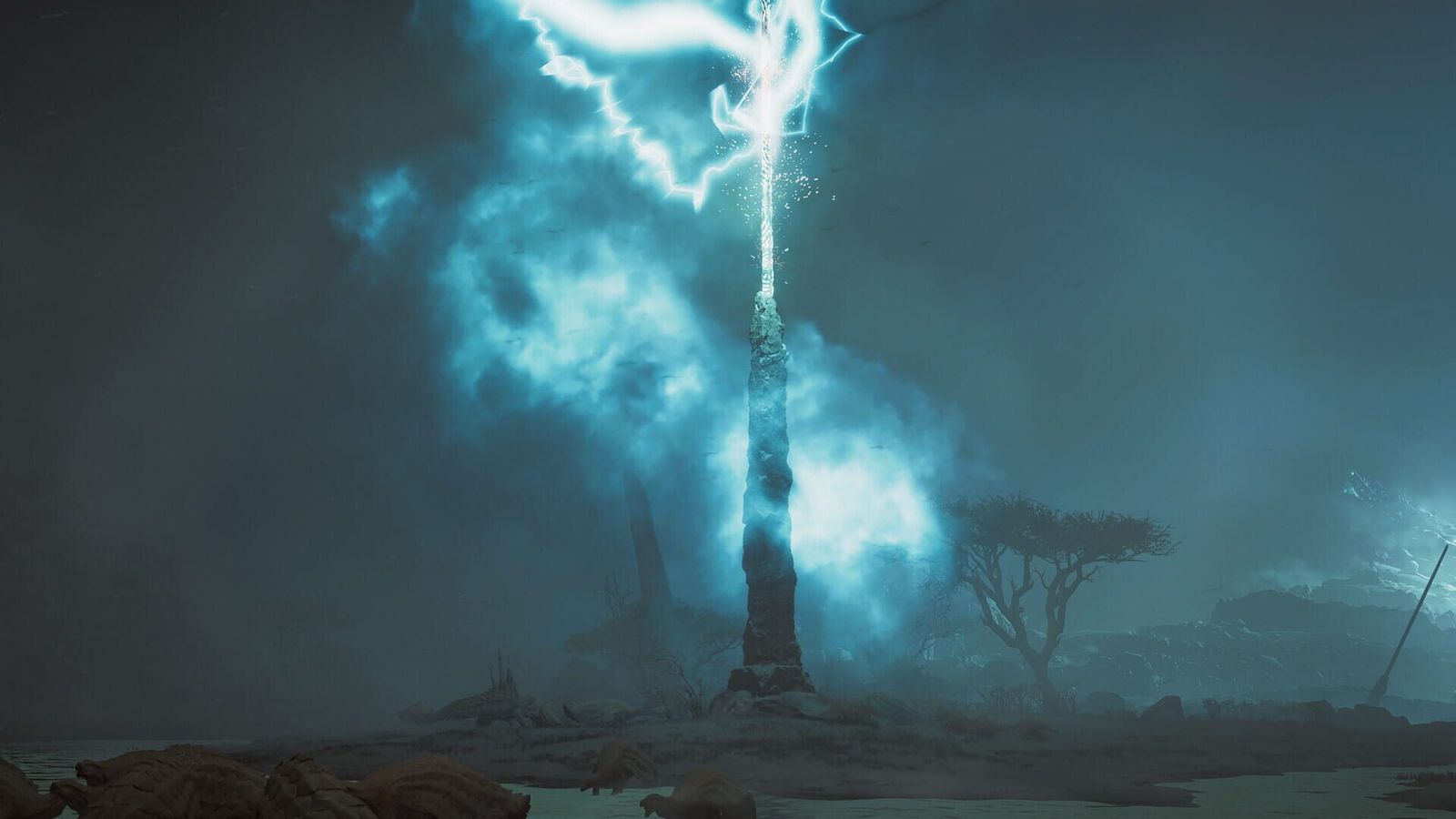
The Training Area is at the Windward Plains Base Camp, it is fast-travellable, and it holds the High Purrformance Barrel Puncher with a configurable attack pattern for combo and damage testing. The line that makes it worth the trip is Capcom's: “items and bowgun ammo won't be depleted while you're inside the Training Area.” (manual 8/1)
That is an unlimited testing ground for builds, ammo types and a weapon you have never touched, at a cost of zero materials. Hunters who skip it end up learning new weapons on live monsters, with a party waiting.
9. Killing when the quest wanted a capture, or the reverse
Capcom states the rules without room for interpretation: “Hunting Quests: You can either slay or capture the main target. Slaying Quests: You must slay the main target. (Capturing it will fail the quest.) Capture Quests: You must capture the main target. (Slaying it will fail the quest.)” (manual 15/2)
When the choice is genuinely yours, capturing ends the fight sooner and hands over Target Rewards immediately. Game8 and PC Gamer both document the reward-pool difference between the two outcomes; that comparison is theirs, not Capcom's. What is official is the tell for when a monster is weak enough to trap: the skull icon that appears on the minimap (manual 6/2). Do not go looking for a health percentage — Capcom publishes none, and the figures guides quote vary by monster.
10. Attacking a field monster before starting a Field Survey
This is the one that costs the most for the least reason. Capcom: “Monsters in the field can be hunted without initiating a Field Survey, but you won't be able to claim any quest rewards.” The item icon next to a monster in the Environment Overview “indicates what you'll get as a quest reward for doing the Field Survey. If you hunt the monster without initiating the quest, you will not receive the reward.” (manual 15/2)
In a game built around wandering into things, that is a trap with no warning attached. A monster you have been tracking for ten minutes can hand you nothing at all because you swung before the survey started. Start it first, every time — it is the first habit our beginner guide tries to install, and the one most worth carrying into the late game.
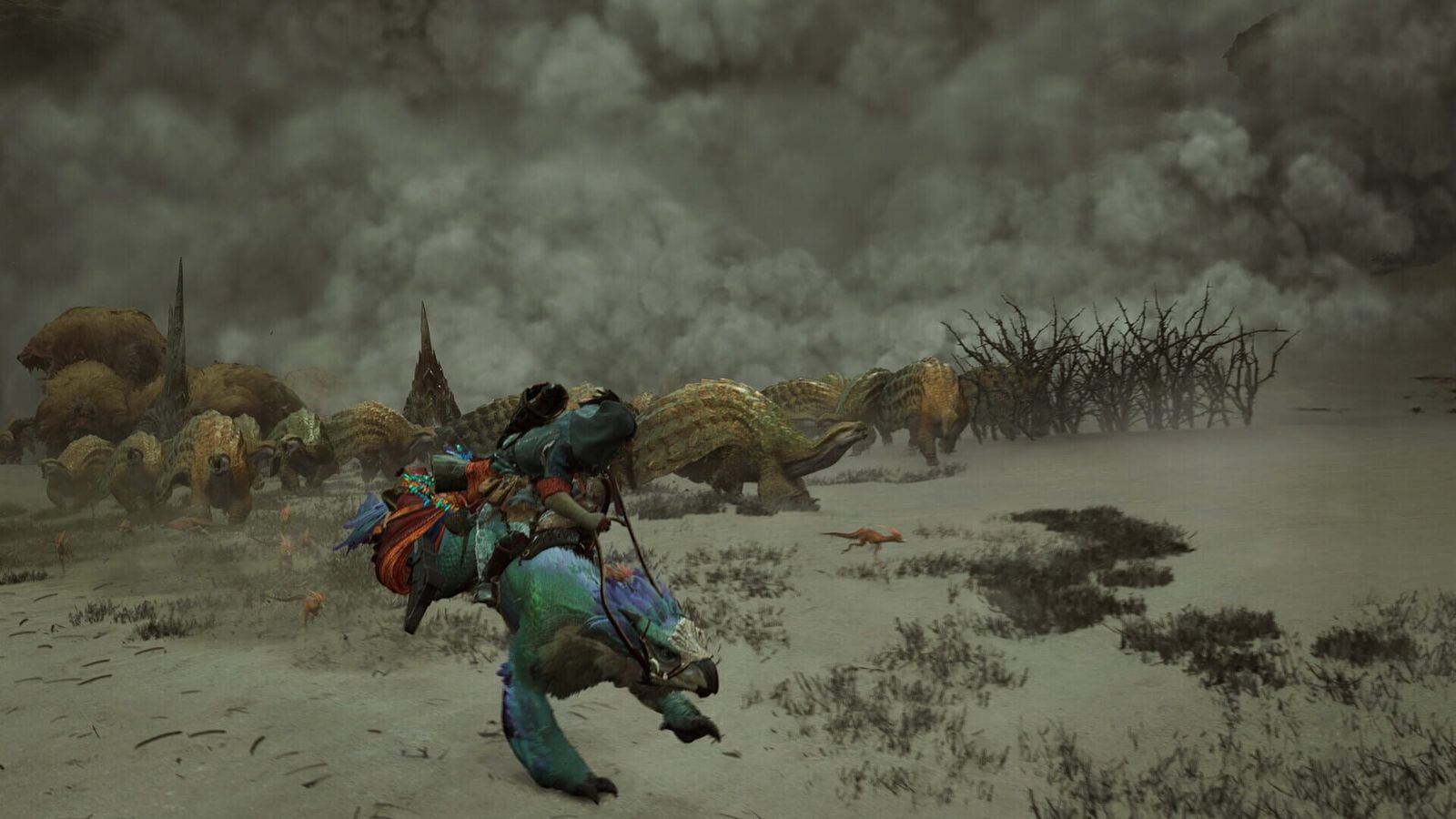
Read back through the list and the same shape keeps appearing: Wilds hands you something for free — a buff, a second weapon, a practice room, a reward — and the mistake is simply declining it. Fix four or five of these and the difficulty curve you have been fighting turns out to have been a habit curve.
FAQ
Should you capture or kill monsters in Monster Hunter Wilds?
It depends on the quest. Hunting Quests allow either. Slaying Quests fail if you capture; Capture Quests fail if you slay. When you have the choice, capturing ends the fight sooner and hands over Target Rewards immediately.
Why am I getting no rewards for monsters I killed?
You probably never started a Field Survey. Capcom states you can hunt field monsters freely, but you cannot claim quest rewards unless the survey was initiated first — by attacking the monster under the right conditions or selecting its map icon.
Do NPC Support Hunters reduce my rewards if they faint?
No. Capcom states that a Support Hunter fainting will never reduce the quest's reward money, and Support Hunters who join as part of the story do not count toward your party size.
My Pop-up Camp disappeared — what happened?
Monsters can destroy Pop-up Camps, leaving them unusable until repaired. Repairs take time or Guild Points to accelerate, and resting at a tent restores every destroyed Pop-up Camp at once.
- Quests — official web manual — Capcom
- Focus Mode — official web manual — Capcom
- Equipment Skills — official web manual — Capcom
- Camps — official web manual — Capcom
- Meals — official web manual — Capcom
- How to capture monsters — PC Gamer
- Monster Hunter Wilds — Focus Mode — Capcom
- Monster Hunter Wilds — Exploration — Capcom
- Weapons Overview and the Training Area — official web manual — Capcom
- Melee Weapon Features — official web manual — Capcom
- Decorations and talismans — official web manual — Capcom
- The Seikret — official web manual — Capcom
- Capturing monsters and the minimap skull icon — official web manual — Capcom
- Getting stronger — official web manual — Capcom
- Armor Sphere — Fextralife
- Capture vs slay rewards — Game8
- Group Skills and armour set bonuses explained — Game Rant