Monster Hunter Wilds Beginner Guide: 12 Things to Know
Twelve things Monster Hunter Wilds doesn't explain well: Focus Mode wounds, the Seikret's second weapon, meals, camps, and how quests actually fail.
Contents
First published against game version Ver.1.042.00.00.
Three things change a new hunter's first ten hours in Monster Hunter Wilds more than anything else: Focus Mode, the second weapon your Seikret is already carrying, and eating before you leave camp. Focus Mode points your attacks where the camera points and lights up wounds, and a Focus Strike destroys one outright for heavy damage and a stagger. The sling holds a whole second weapon you can swap to mid-hunt. A meal grants temporary boosts to health, stamina and attack. Get those three habits in place and everything below is refinement.
The other nine are the same kind of thing — mechanics Capcom documents in its own web manual and then barely mentions again. Where a detail only exists on a guide site, we say whose it is. The rest of our coverage sits on the Monster Hunter Wilds hub.
What is Focus Mode, and why does everything depend on it?
Hold the Focus Mode button with your weapon drawn and two things happen. Your attacks and guards fire where the camera faces rather than where your hunter is pointed, and your scoutflies turn red over wounds and weak points (manual 3/4, official Focus Mode page). That is the difference between swinging at a monster and swinging at part of one.
Wounds have three official stages, and Capcom spells them out: “By attacking a monster continuously in one spot, you can open up a Wound. There are three levels to a Wound: a Tear, then an Open Wound after further attacks, and finally a Scar after the Wound is destroyed. Attacking a Wound will increase damage, and landing a Focus Strike will destroy the Wound in one go.”
A Focus Strike also staggers the monster, which is what wins hunts: free positioning for the whole party. The controls are unglamorous — hold L2 or LT, or the mouse side button or Alt, as Game8 documents.
What we are not telling you is how many wounds a monster can carry, or what opens one. Those numbers circulate widely and none come from Capcom. Each weapon also has its own Focus Strike, which is the subject of our guide to all 14 weapon types.
Sharpness, decorations and set bonuses: three levers you already own
Sharpness is melee-only and punishes you twice. Capcom: “While you can attack continually, this will eventually decrease the weapon's Sharpness Gauge, reducing the weapon's power and making it easier to deflect.” Deflections drain it faster still. You can sharpen while riding (manual 8/2).
Decorations come in two pools that never mix: weapon decorations in weapons, armor decorations in armor, slots Lv1 to Lv3, and no higher-level decoration in a lower slot. You equip exactly one talisman (manual 8/5). Armour skills are likewise two systems: “Set Bonus Skills generally kick in when you equip all the pieces of the same armor set, while Group Skills kick in if your pieces of armor are based on similar materials.” Game Rant adds thresholds that are not on a Capcom page.
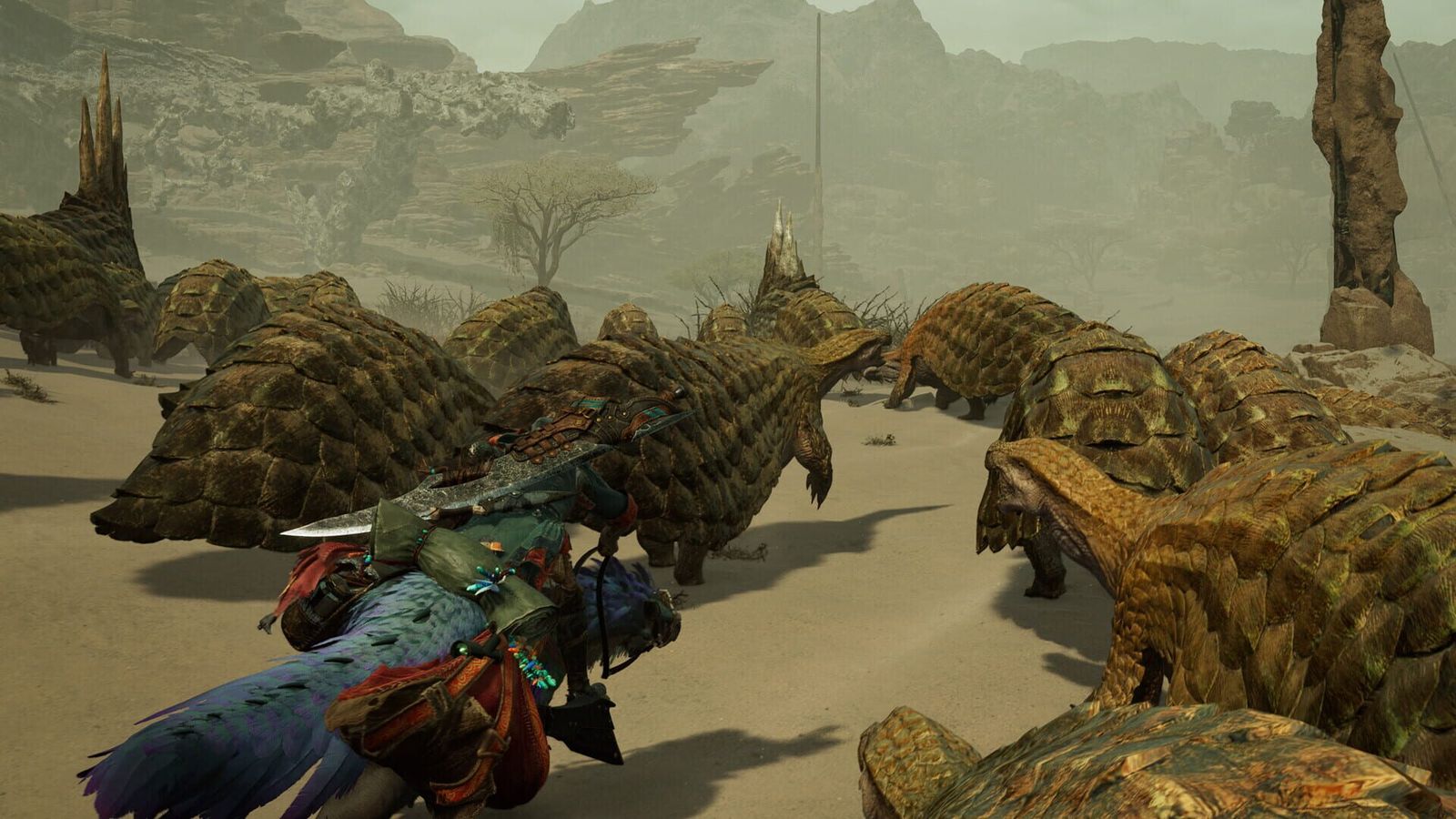
Your Seikret carries a second weapon (and you probably never used it)
Capcom's own words, from the official hunting page: “Your Seikret isn't just for travel—you can also stash an extra weapon in its weapon sling, allowing you to switch between two weapons of your choice.” It is the most under-read sentence on the site.
A dedicated button swaps primary and secondary, and pressing it on foot summons the Seikret first (manual 11/2). In practice: a melee weapon for the parts of a hunt you control, something ranged for the parts you do not.
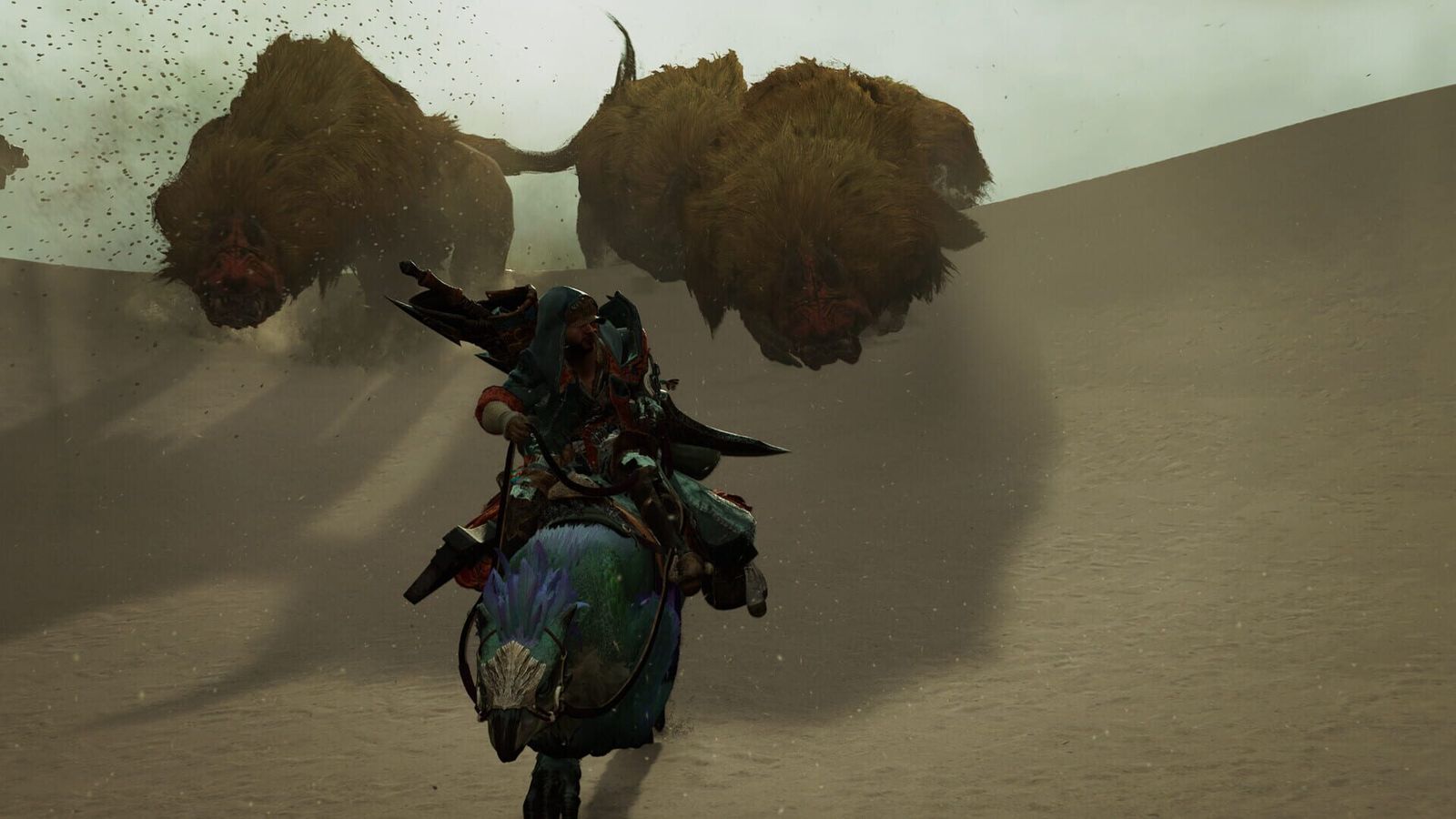
The mount does more than carry things. Auto-move follows a route network to your pinned objective, scoutflies show the path, and the Seikret uses routes you cannot walk. While mounted you can use the slinger, heal, sharpen and gather, and “While mounted, your Seikret will also evade some monster attacks automatically.” Everyone in multiplayer has their own.
Your Palico doesn't die
At zero HP your Palico takes cover, heals and returns, so it is never a resource you can lose (manual 11/1). Vigorwasp Delivery heals, Purewasp Delivery cures status, Place Paracorn sets a Shock Trap, Let-'Er-RRRip makes monsters easier to wound, and Provoke pulls aggro. Palico weapons are Sever, which helps cut tails, or Blunt, which can stun.
How does the weather cycle work in Monster Hunter Wilds?
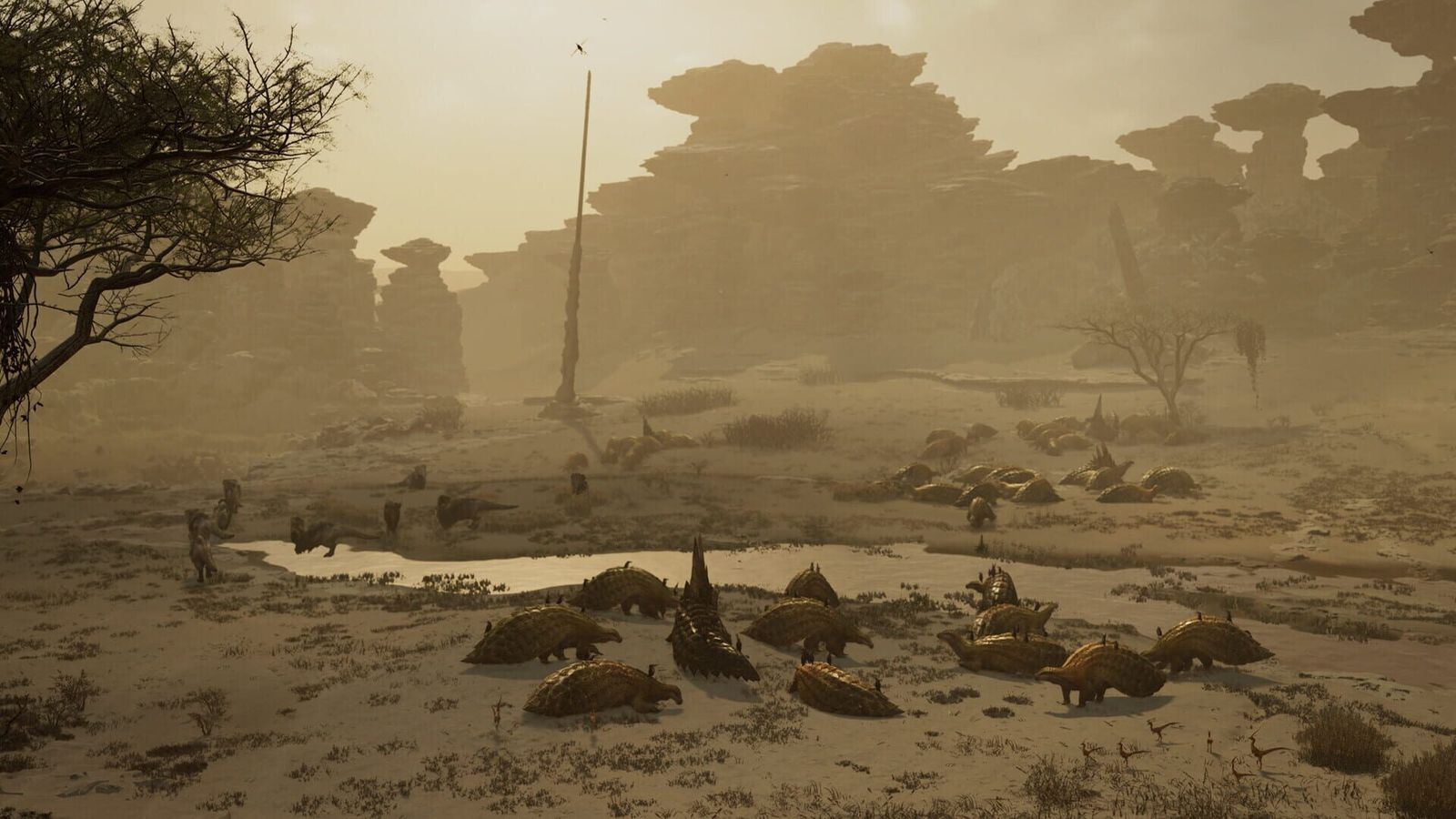
Each region runs its own weather clock: “The weather cycle can be roughly divided into three phases—Plenty, Fallow, and Inclemency… The cycle moves independently from region to region, meaning one may experience Plenty during another's Fallow.” (manual 5/2)
Plenty is when packs gather and biodiversity peaks. Fallow thins the roster and brings frequent turf wars. Inclemency is volatile, and Capcom adds that “there are reportedly even some monsters that only appear during Inclemency.” If a monster refuses to appear, check the phase first.
Three Inclemency events are named on the Ecosystems page: Sandtide in the Windward Plains, Downpour in the Scarlet Forest, Firespring in the Oilwell Basin. The Iceshard Cliffs event is not — Capcom calls that region only “a frigid land swept with snowy blizzards”. Guide sites have named it anyway; we are not.
| Phase | What changes | Named event |
|---|---|---|
| Plenty | Monster packs gather; highest biodiversity | — |
| Fallow | Diversity drops; frequent turf wars between monsters | — |
| Inclemency | Most unpredictable; some monsters appear only now | Windward Plains: Sandtide · Scarlet Forest: Downpour · Oilwell Basin: Firespring |
Always eat before a hunt (and how meals actually work)
Meals grant temporary increases to health, stamina, attack “and other attributes”, plus Meal Skills (manual 9/3). None of it costs anything you were saving, which makes hunting unfed pure wasted damage.
Three ways to eat: the tent, via Base Camp Menu then BBQ Menu then Grill a Meal; the Portable BBQ Grill from the Item Bar, anywhere in the field; or a Meal Invitation from a settlement NPC.
A Custom Meal has three parts. A Ration sets the buff — meat raises Attack, fish Defense, vegetables Elemental Resistance, all of them health and stamina. An Additional Ingredient activates a Food Skill and extends the duration. A Finishing Touch adds a second Food Skill and needs that ingredient first. Rations come from the Ingredient Center at the Windward Plains Base Camp.
If that is more admin than you want, the plain BBQ option makes a Well-done Steak, which raises maximum stamina and restores health and stamina (official exploration page).
Base Camps vs Pop-up Camps, and why yours keeps disappearing
Base Camps are Guild-built: they appear automatically as the story advances and hold every facility (manual 6/5). Pop-up Camps are yours, placed at discovered sites with a Camping Kit or through the Pop-up Camp Meowster, and they cost Guild Points.
They also get destroyed. Monsters can wreck a Pop-up Camp, leaving it unusable until repaired. Repairs take time, or Guild Points to hurry — but resting at a tent restores every destroyed Pop-up Camp at once. Both camp types are fast-travel and respawn points, which is why a wrecked one costs more than it looks.
Capcom has also raised the ceiling: update Ver.1.041 increased the maximum number of Pop-up Camps in the Windward Plains, Scarlet Forest and Oilwell Basin (update notes).
The Training Area is free — and nothing you use in it is consumed
The Training Area sits at the Windward Plains Base Camp, fast-travellable, with the High Purrformance Barrel Puncher and a configurable attack pattern — and “items and bowgun ammo won't be depleted while you're inside the Training Area.” (manual 8/1)
The same tent menu handles appearance. Change Appearance edits some of your hunter, but “not all aspects of your character can be edited” without a Character Edit Voucher or Palico Edit Voucher (manual 15/3).
How do you play Monster Hunter Wilds with friends?
Multiplayer is three nested layers. A Lobby holds up to 100 players and governs who can normally join your quests. A Link Party holds up to four and is the group you hunt with. An Environment Link puts that group in your world (manual 7/3, official multiplayer page).
Set up the Link Party first. It persists across quests, has members-only text and voice chat, notifies everyone when one of you starts a quest, and lets members join from a different lobby entirely. Environment Link lives under Start Menu, Communication, Link Party; only Link Party members can be brought in, and never mid-quest.
Crossplay is supported — Capcom calls Wilds “the first title in the series to feature cross-play” (Capcom IR). Lobbies only unlock after some story progress (manual 15/1).
SOS flares and Support Hunters: what you need to know
Once a quest has begun you can fire an SOS flare, calling up to three hunters worldwide. If not enough humans answer in time, NPC Support Hunters fill the slots — and hand them back the moment a real player joins (manual 6/6).
Two details make them better than they look. Story Support Hunters do not count toward party size at all. And a Support Hunter fainting will never reduce your reward money — the opposite of a human teammate carting.
The setting to know is at Quest Counter, Settings, Multiplayer Settings: “Only Players” blocks Support Hunters entirely. Plenty of hunters flip that on early for atmosphere, then wonder why nobody answers their flare.
How quests actually fail (it isn't three carts)
The three-cart rule is from another game. Capcom's version: a quest fails when “the reward money is reduced to 0 by fainting” or the timer runs out, and “the number of times you can faint before this happens varies from quest to quest” (manual 6/3).
The more expensive failure is quieter. Capcom is unambiguous: “Monsters in the field can be hunted without initiating a Field Survey, but you won't be able to claim any quest rewards.” The item icon beside a monster in the Environment Overview “indicates what you'll get as a quest reward for doing the Field Survey. If you hunt the monster without initiating the quest, you will not receive the reward.” (manual 15/2, manual 5/2)
Then the quest type, stated outright: “Hunting Quests: You can either slay or capture the main target. Slaying Quests: You must slay the main target. (Capturing it will fail the quest.) Capture Quests: You must capture the main target. (Slaying it will fail the quest.)”
| Quest type | Slaying the target | Capturing the target |
|---|---|---|
| Hunting Quest | Allowed | Allowed |
| Slaying Quest | Required | Fails the quest |
| Capture Quest | Fails the quest | Required |
Those last two anchor a longer list we keep: the ten mistakes worth unlearning in Wilds, each checked against the same manual.
None of this needs prior Monster Hunter experience, only a sense of which systems are load-bearing. If your real question is whether the PC version is worth buying in 2026, we gave that its own piece.
FAQ
Is Monster Hunter Wilds good for a first Monster Hunter game?
It is built to be. Focus Mode marks weak points for you, the Seikret auto-navigates to objectives, and NPC Support Hunters fill your party if nobody answers your SOS flare. Every numbered Monster Hunter tells its own story, so no prior game is needed.
How many weapon types are in Monster Hunter Wilds?
Fourteen — eleven Blademaster and three Gunner. Blademaster weapons passively reduce physical damage taken; Gunner weapons reduce elemental damage taken. Capcom publishes no official difficulty rating for any of them.
Can you carry two weapons in Monster Hunter Wilds?
Yes. Your Seikret carries a second weapon in its sling and you can swap between the two at will. Pressing the swap button while on foot summons the Seikret automatically.
How many times can you faint before failing a quest?
It varies. Capcom states that fainting reduces the quest's reward money and you fail when it hits zero — and that the number of faints allowed differs from quest to quest. There is no fixed three-cart rule.
Does Monster Hunter Wilds have crossplay?
Yes. Capcom describes Wilds as the first game in the series to feature cross-play, and the Nintendo Switch 2 version arriving on 4 December 2026 supports full cross-platform multiplayer.
- Focus Mode — official web manual — Capcom
- Monster Hunter Wilds — Hunting — Capcom
- Monster Hunter Wilds — Focus Mode — Capcom
- Monster Hunter Wilds — Ecosystems — Capcom
- Ver.1.041.00.00 update notes — Capcom
- Monster Hunter Wilds for Nintendo Switch 2 announcement — Capcom IR
- Quests — official web manual — Capcom
- Quest failure conditions — official web manual — Capcom
- Camps — official web manual — Capcom
- SOS flares and Support Hunters — official web manual — Capcom
- Meals — official web manual — Capcom
- Weapons Overview and the Training Area — official web manual — Capcom
- Melee Weapon Features — official web manual — Capcom
- Equipment Skills — official web manual — Capcom
- Decorations and talismans — official web manual — Capcom
- Palicoes — official web manual — Capcom
- The Seikret — official web manual — Capcom
- Multiplayer — official web manual — Capcom
- Monster Hunter Wilds — Exploration — Capcom
- Focus Mode controls and per-weapon Focus Strikes — Game8
- Group Skills and armour set bonuses explained — Game Rant