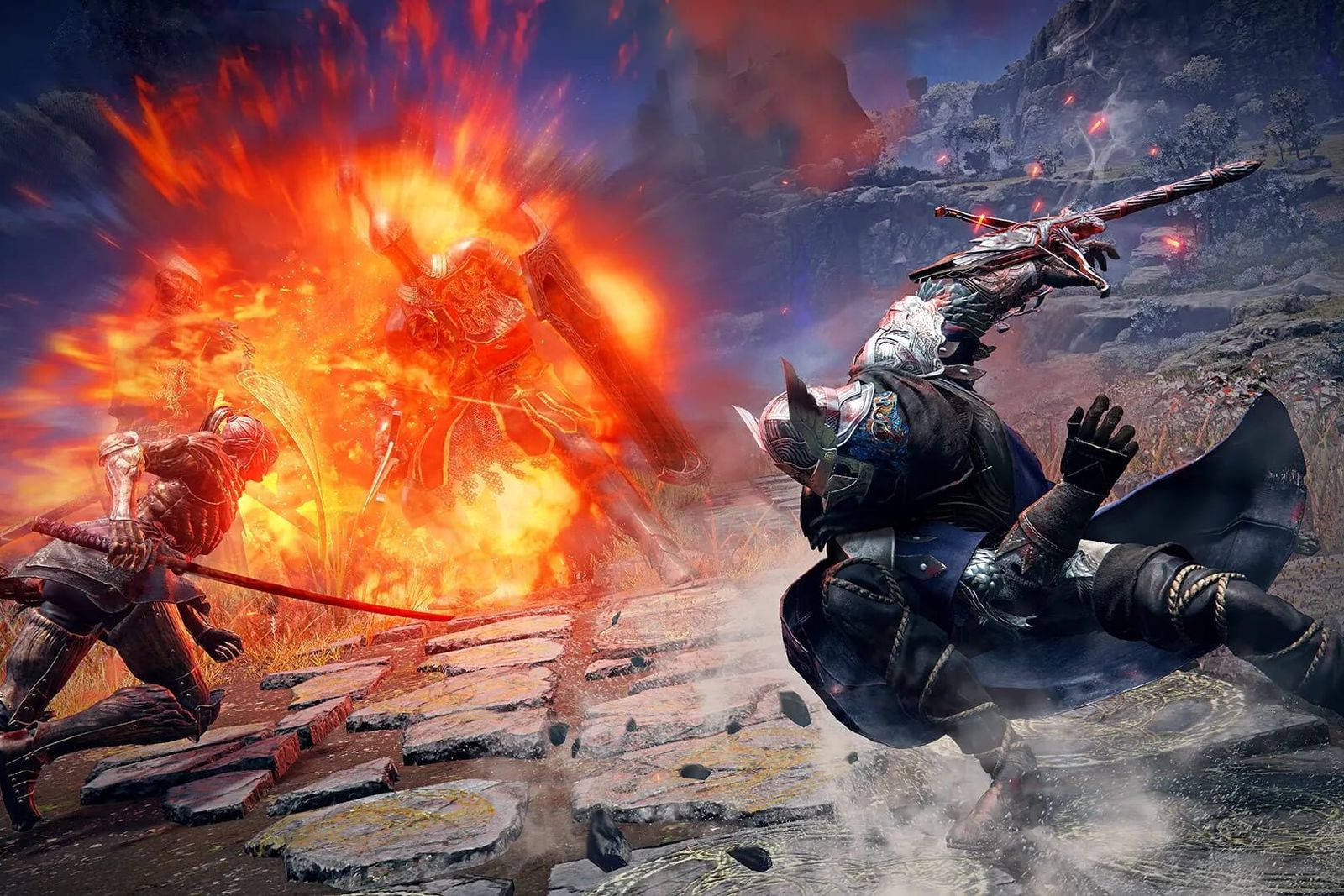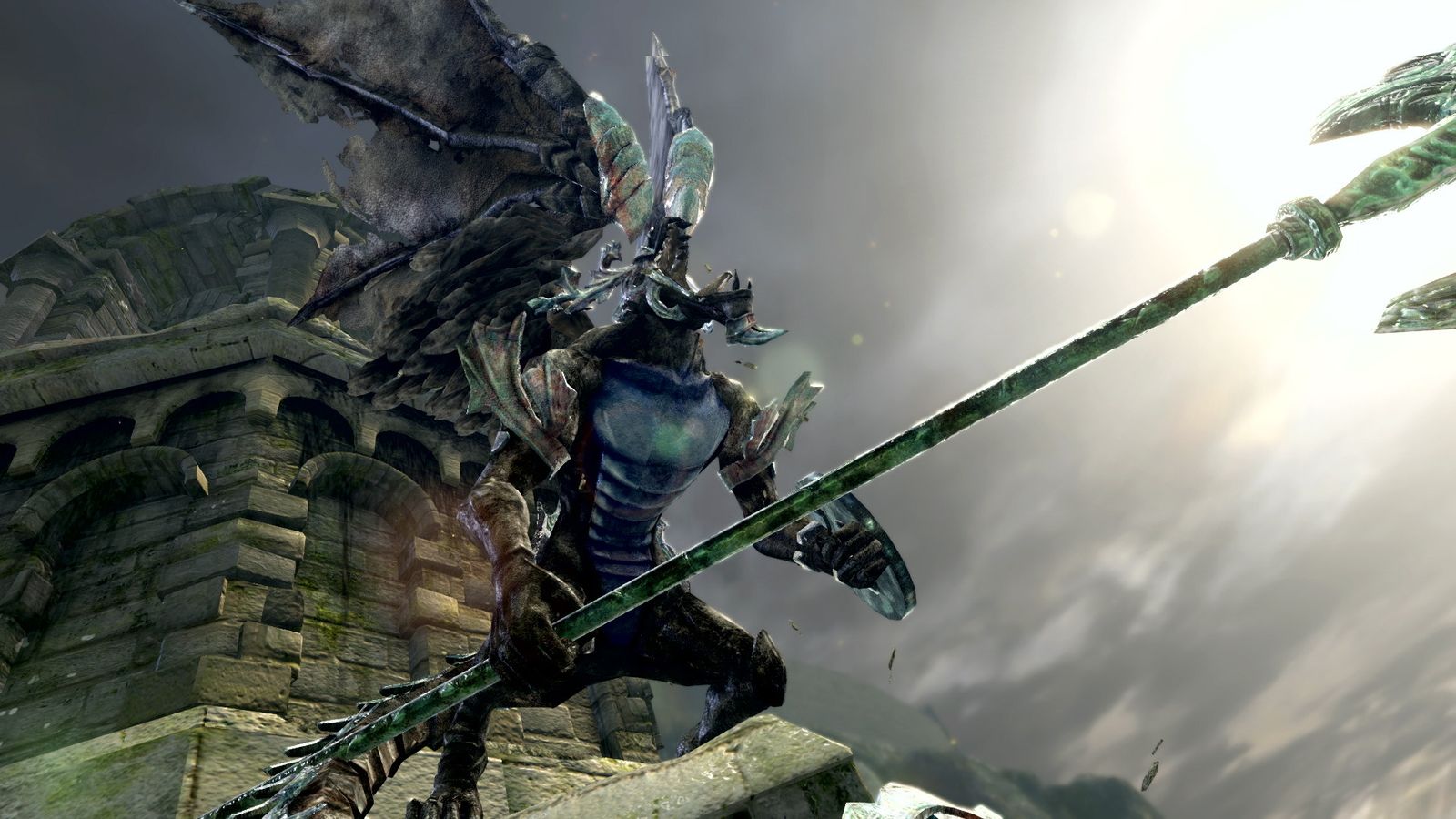
Dark Souls reached North American shelves on 4 October 2011, 15 years ago today, and the numbers say its design has outgrown its own sales. FromSoftware put the whole Dark Souls series at more than 27 million copies in May 2020; Elden Ring, built on the same template, passed 30 million on its own in April 2025.
This feature is built on FromSoftware's and Bandai Namco's own sales announcements, IGDB's regional release dates, Metacritic and OpenCritic pages read on 4 October 2026, and Steam's public player and review counters, checked at 07:08 UTC the same day. Nobody replayed anything for it: the argument rests on the data, and where the data runs out, we say so.
How many copies has Dark Souls sold?
The last series-wide figure the publishers released themselves dates from 19 May 2020. FromSoftware's press release counted more than 27 million units across Dark Souls, Dark Souls II, Dark Souls III and Dark Souls Remastered, physical shipments and digital downloads combined, and said Dark Souls III alone had passed 10 million. Bandai Namco's US release carried the same numbers.
That is the figure this piece leans on, because it is the clean one. Later reports in November 2025 put the series close to 40 million, citing a Bandai Namco financial document covering the period to March 2025. We could not trace that number back to a primary page, so it stays out of our tables.
The 2020 release is also a useful record of how the publishers explain the series' success. It credits the "sense of accomplishment" of the game design, the world's sense of mystery and the "transient online systems" that let strangers help or invade each other. None of those is about making the game easier to approach, which is the point: the publishers' own explanation for 27 million copies is the difficulty, the strangeness and the shared online layer.
Elden Ring is the contrast. It launched in February 2022, and at the end of April 2025 its official account thanked "30 million Tarnished", as VGC and Insider Gaming reported; Insider Gaming notes the previous milestone, 28.6 million, came in December 2024. One game, three years and two months, more copies than four Dark Souls releases had managed in almost nine.
| Date | Milestone | Time since first launch | Source |
|---|---|---|---|
| 19 May 2020 | Dark Souls series passes 27 million units (four releases) | 8 years, 8 months (from 22 September 2011) | FromSoftware |
| 19 May 2020 | Dark Souls III passes 10 million units | 4 years, 1 month (from April 2016 on Steam) | FromSoftware |
| December 2024 | Elden Ring reaches 28.6 million | 2 years, 10 months (from February 2022) | Insider Gaming |
| 28 April 2025 | Elden Ring passes 30 million | 3 years, 2 months | VGC, Insider Gaming |
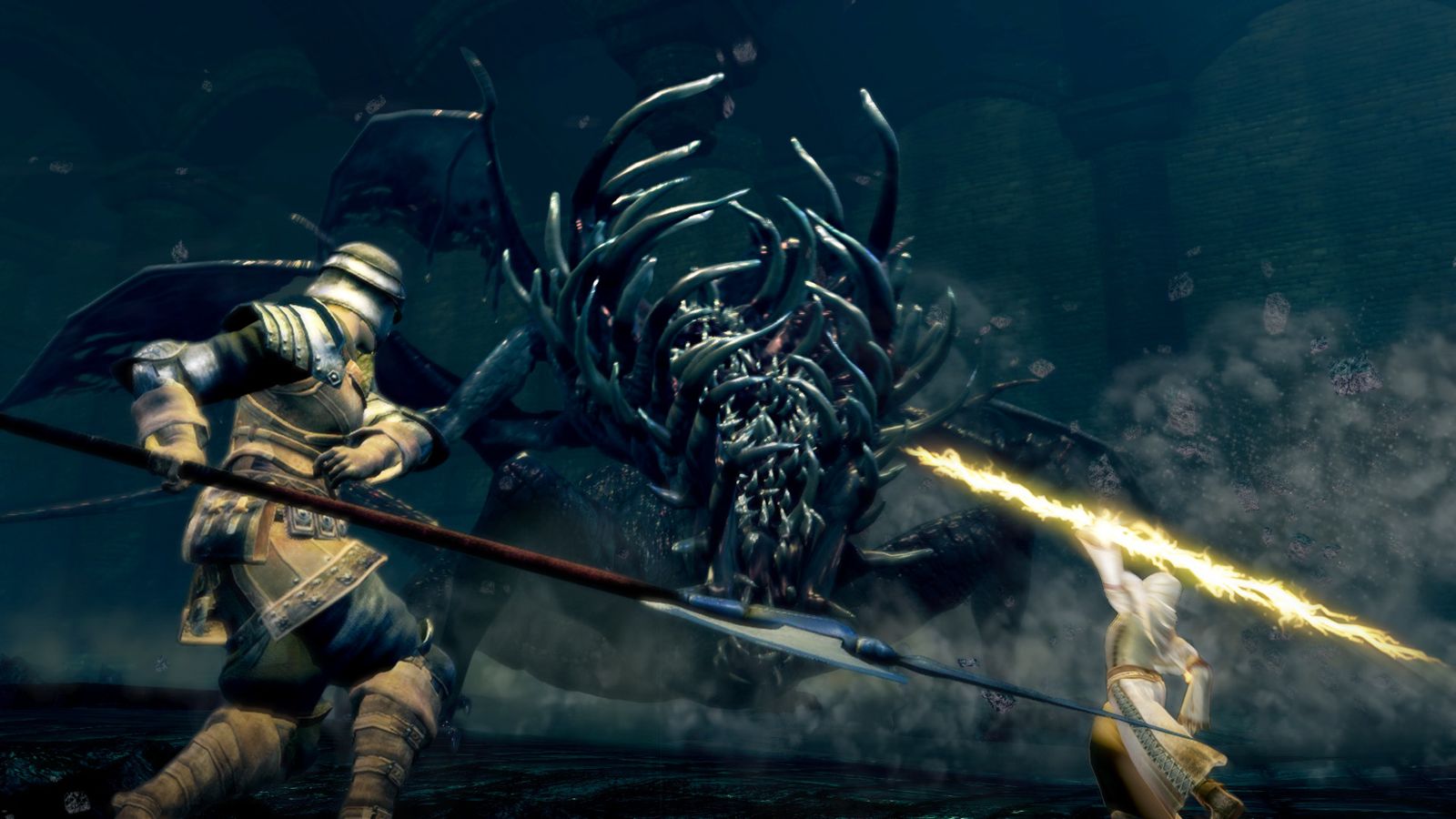
How did Dark Souls get here? 15 years in seven dates
The 2011 game has lived three lives: a console release on PlayStation 3 and Xbox 360, a PC port that arrived a year later, and a 2018 remaster that replaced the port on Steam. The timeline below sticks to dates a publisher, a store or a dated report confirms.
| Date | What happened | Source |
|---|---|---|
| 22 September 2011 | Japanese launch on PlayStation 3 and Xbox 360 | IGDB |
| 4 October 2011 | North American launch; Europe follows on 7 October | IGDB |
| 24 August 2012 | Prepare to Die Edition on PC | Steam store page |
| May 2018 | Dark Souls Remastered on PC, PlayStation 4 and Xbox One; a Switch version follows | Steam store page, Metacritic |
| 23 November 2021 | Voted Ultimate Game of All Time at the Golden Joystick Awards, narrowly ahead of Doom | Future plc press release |
| Early 2022 | PC online features across the series switched off after a remote code execution exploit in Dark Souls III | PCGamesN |
| 9 November 2022 | Online features for Dark Souls Remastered on PC reactivated; the 2012 edition's servers are not coming back | PCGamesN |
Do critics and Steam players still rate Dark Souls as highly as Elden Ring?
Almost. The 2011 original still sits at 89 on Metacritic from 66 critic reviews, level with Dark Souls III. Elden Ring is the only game in the table above 90 on both aggregators, with a 96 Metascore and a 95.1 Top Critic Average on OpenCritic. The remaster is the weakest-reviewed entry, which says more about a 2018 port of a 2011 game than about the game underneath.
| Game | First release | Metacritic (reviews) | OpenCritic Top Critic Average |
|---|---|---|---|
| Dark Souls | 2011 | 89 (66) | Not listed |
| Dark Souls II | 2014 | 91 (69) | 86.6 (Scholar of the First Sin, 2015) |
| Dark Souls III | 2016 | 89 (70) | 89.6 |
| Dark Souls Remastered | 2018 | 84 (56) | 84.2 |
| Sekiro: Shadows Die Twice | 2019 | 90 (89) | Not read |
| Elden Ring | 2022 | 96 (93) | 95.1 |
Steam players are kinder to the original than critics were to the remaster. Dark Souls Remastered holds 92.4% positive from 156,339 reviews, 0.6 points behind Elden Ring's 93.0% from more than 1.15 million. Dark Souls III (94.3%) and Sekiro (95.2%, the only one Steam rates Overwhelmingly Positive) sit above both. The two lowest scores belong to Dark Souls II: Scholar of the First Sin (83.9%) and Nightreign, the 2025 co-op spin-off (81.7%).
| Game (Steam release) | Players at 07:08 UTC | Steam reviews | % positive | Steam rating |
|---|---|---|---|---|
| Dark Souls: Prepare to Die Edition (2012, no longer sold) | 87 | 78,559 | 91.5% | Very Positive |
| Dark Souls II (2014) | 145 | 46,915 | 88.1% | Very Positive |
| Dark Souls II: Scholar of the First Sin (2015) | 4,315 | 132,856 | 83.9% | Very Positive |
| Dark Souls III (2016) | 6,909 | 441,005 | 94.3% | Very Positive |
| Dark Souls Remastered (2018) | 4,619 | 156,339 | 92.4% | Very Positive |
| Sekiro: Shadows Die Twice (2019) | 6,650 | 356,703 | 95.2% | Overwhelmingly Positive |
| Elden Ring (2022) | 28,101 | 1,157,466 | 93.0% | Very Positive |
| Elden Ring Nightreign (2025) | 19,729 | 191,901 | 81.7% | Very Positive |
Add the two PC versions of the 2011 game together and they carry 234,898 Steam reviews, more than Nightreign has collected in 16 months. That is a long tail for a game Steam no longer sells in its original form: the store page for the Prepare to Die Edition no longer offers a purchase option.
Is Dark Souls now just Elden Ring's ancestor?
If you measure relevance by who is playing right now, yes. At 07:08 UTC on Sunday 4 October, Elden Ring had 28,101 people in game on Steam and Nightreign 19,729. Dark Souls Remastered had 4,619, fewer than Dark Souls III (6,909) or Sekiro (6,650), and the 2012 edition had 87. Six times as many people were in Elden Ring as in the game that turns 15 today.
That is the strongest case against the anniversary nostalgia, and it deserves to be stated plainly: on the platform where it can be measured, the original is now a niche game kept alive by a dedicated audience, and its own online life on PC was switched off for most of 2022. The 27 million figure is a historical number; the growth since has been somebody else's.
The counter-evidence is in the quality signals rather than the volume ones. A 92.4% approval rate from more than 150,000 reviewers is not a museum piece's score, and players organise around it: when PC online features returned in November 2022, PCGamesN pointed readers to Return to Lordran, a yearly community event that brings players back into the remaster at the same time. A year earlier, a public vote named Dark Souls the Ultimate Game of All Time at the Golden Joysticks, ahead of Doom by fewer than 50 votes, according to the organisers. Our reading: Elden Ring won the audience, Dark Souls kept the reputation.
What does Dark Souls' anniversary say about Nightreign?
Nightreign is the most recent test of how far the 2011 template stretches, and the Steam table is blunt about it: the co-op spin-off has the second-largest active player base of the group but the lowest approval rate. Our evidence-based Nightreign review weighs the critic and player scores side by side.
The pattern the numbers suggest is narrower than a neat story about fidelity to the original: the audience follows the newest FromSoftware release, while approval does not. Sekiro, a single-player game with a fixed protagonist, has the highest Steam score in the group; Nightreign has the lowest. Eight data points make a pattern, not a law. If you are coming to the series through the spin-off, our Nightreign explainer covers what it keeps and what it drops; for another launch-versus-long-tail story told in sales data, see how Monster Hunter Wilds stalled after 10 million.
Where can you play Dark Souls in 2026?
The version on sale is Dark Souls Remastered, listed on Metacritic for PC, PlayStation 4, Xbox One and Nintendo Switch. On Steam it was $19.99 when we checked on 4 October 2026, half its $39.99 list price, with the same 50% discount on Dark Souls II: Scholar of the First Sin. Dark Souls III and Sekiro were $29.99 (from $59.99); Elden Ring was at its full $59.99. Discounts like these come and go, and this one overlapped with the Steam Autumn Sale.
If you own the 2012 Prepare to Die Edition on Steam, you were in a small club on Sunday morning, 87 players, and the edition has no official online play: its servers were not brought back after the 2022 shutdown. For messages, summons and invasions on PC, the remaster is the only option, and its servers have been running again since November 2022.
A practical note for newcomers arriving from Elden Ring: on PC the remaster has roughly twice as many Steam reviews as the 2012 edition and about 50 times as many concurrent players in our snapshot, so it is where the remaining community is. It is also the version any future data update in this piece will track.
What we don't know
- Sales of the original Dark Souls on its own. Publishers have only given series totals and the Dark Souls III figure, so there is no clean number for the 2011 game.
- A current, primary series total. The 27 million figure is from May 2020; the reported 39.71 million, attributed to a Bandai Namco report covering the period to March 2025, is not something we could verify at source.
- Console activity. PlayStation, Xbox and Switch do not publish concurrent player counts, so the Steam table covers PC only.
- Whether a Sunday-morning snapshot is typical. 07:08 UTC is early in Europe and the middle of the night in the Americas, so every player count above understates daily peaks; the ratios between games are the useful part.
Who leaves Steam reviews. Reviewers who stayed with a 15-year-old game are likely to be fans, which may flatter the older entries. The same caveat applies to Batman: Arkham City at 15, another 2011 game still rated 96.2% positive on Steam.
We will refresh the tables if FromSoftware or Bandai Namco publish a new Dark Souls figure. For FromSoftware's current chapter, the Elden Ring Nightreign hub collects every guide and data piece we have published on it.
FAQ
When did Dark Souls come out?
Dark Souls launched on PlayStation 3 and Xbox 360 on 22 September 2011 in Japan, 4 October 2011 in North America and 7 October 2011 in Europe. The PC Prepare to Die Edition followed on 24 August 2012, and Dark Souls Remastered in May 2018.
How many copies has Dark Souls sold?
The latest series-wide figure from FromSoftware is more than 27 million units across Dark Souls, Dark Souls II, Dark Souls III and Dark Souls Remastered, announced on 19 May 2020. A figure near 40 million has been reported since, but we could not verify it at source.
Has Elden Ring outsold Dark Souls?
Elden Ring alone passed 30 million copies in April 2025, more than the 27 million the whole Dark Souls series had reached by May 2020. Whether it has passed the series' current total depends on a newer Dark Souls figure that has not been published as a primary source.
Is Dark Souls Remastered still online on PC?
Yes. Online features for the PC version of Dark Souls Remastered were reactivated on 9 November 2022 after being switched off in early 2022 because of a security exploit. The servers for the 2012 Prepare to Die Edition were not restored.
- "DARK SOULS" series exceeds 27 million sales (press release, 19 May 2020) — FromSoftware
- Dark Souls III surpasses 10 million units in sales worldwide (US press release) — Bandai Namco Entertainment
- Elden Ring has sold over 30 million copies, FromSoftware says — VGC
- Elden Ring hits another sales milestone — Insider Gaming
- Winners announced at the 39th Golden Joystick Awards — Future plc via GamesPress
- PC, Final Fantasy 14 and Resi Village win big at Golden Joystick Awards 2021 — PC Gamer
- Dark Souls Remastered PC servers are back online — PCGamesN
- Dark Souls Remastered on Steam (reviews and release date) — Steam
- Dark Souls critic reviews — Metacritic
- Dark Souls III reviews — OpenCritic
- Dark Souls trilogy franchise passes 40 million copies sold (secondary report) — KitGuru
First published on the 15th anniversary of the North American release. Steam figures checked at 07:08 UTC; Metacritic and OpenCritic read the same morning.