The Witcher 2 Act II: Why Its Narrative Gamble Still Stands Alone
The Witcher 2's Iorveth vs Roche split created two entirely different Act IIs — a narrative gamble that changed RPG storytelling and has never truly been repeated.

- The Witcher 2's Act II split players into two completely separate storylines based on one choice between Iorveth and Roche — a design so ambitious it has never been replicated at scale.
- CD Projekt RED's own game director called it a 'lost experiment' due to the enormous production cost of building two full acts that most players would only see once.
- In 2026, true branching narratives of this depth remain virtually absent from AAA games — making The Witcher 2's Act II a singular achievement in the history of RPG storytelling.
What Made The Witcher 2's Iorveth vs Roche Choice So Different From Every Other RPG?
The Witcher 2: Assassins of Kings did something in 2011 that almost no AAA game has dared to replicate since: it built two entirely separate Act IIs and asked players to choose between them, knowing full well most would only ever see one. The Iorveth vs Vernon Roche decision at the end of Act I is not a moral slider, not a dialogue wheel with colour-coded outcomes — it is a genuine fork in the road that leads to completely different locations, characters, quests, and political storylines for the next fifteen-plus hours of gameplay.
As GameCritics noted in their original review, 'choice and consequence in The Witcher 2 isn't the kind of moral absolutism that most RPGs typically descend into.' Siding with Iorveth, the elven Scoia'tael commander, plunges Geralt into a classic high-fantasy rebellion narrative set in Vergen. Siding with Vernon Roche, the brutal human special forces captain, transforms the game into a tightly wound political thriller played out through King Henselt's military camp in Aedirn. The tone, the allies, the antagonists — virtually everything shifts.
This was not a minor content divergence. According to CD Projekt RED's own retrospective commentary, the two paths represent roughly equivalent amounts of development time and creative output — effectively meaning the studio built two games and shipped them as one. In an era when most RPG 'choices' amount to slightly different cutscenes and the same destination, The Witcher 2's Act II remains genuinely shocking in its ambition.

What Made the Iorveth vs Roche Choice So Revolutionary?
The genius of the Iorveth/Roche split lies in what players do not know when they make the choice. At the end of Act I, you are asked to trust one of two compelling characters without any preview of what each path entails. There is no 'choose the elven rebellion path' prompt — just a decision about who you stand with in a moment of crisis. The full implications only reveal themselves hours later, and the only way to understand the other side is to play the game again from the beginning.
The Iorveth path sends Geralt to Vergen, a dwarven city under siege, where he allies with non-human rebels and witnesses the ugly mechanics of racial persecution firsthand. The story here reads as a meditation on resistance, identity, and the cost of idealism. The Roche path deposits Geralt in King Henselt's military camp, a suffocating environment of coups, betrayals, and brutal realpolitik. As Fanbyte observed in their retrospective analysis, 'you won't learn about how different things can be until you choose your opportunity cost in an all-new playthrough' — a design philosophy that rewards completionists without punishing those who play once.
Critically, the split is not cosmetic. Key characters live or die depending on your path. Entire questlines exist in one version and are completely absent from the other. The Roche path includes a prison break sequence and a brutal assassination mission that Iorveth players never experience. The Iorveth path contains a sequence involving the fate of a sorceress that simply does not exist on the other route. This is parallel storytelling at a scale that was genuinely unprecedented in Western RPGs at the time, and GamesRadar praised it as evidence that 'CD Projekt RED had delivered a masterfully crafted experience.'

Why Has This Narrative Approach Disappeared From Modern AAA Games?
The answer is blunt: it costs too much and reaches too few players. Adam Badowski, co-founder of CD Projekt RED and game director of The Witcher 2, reflected on the design candidly: 'Witcher 2 had a very complicated game structure because there were two paths. You could take one path and never see the other. From a production point of view, a waste of resources.' When a studio spends the equivalent of an entire game's worth of content on content that statistically half the playerbase will never see, the mathematics of modern AAA development push back hard.
Modern open-world RPGs have converged on a different model: the illusion of choice. Dragon Age: The Veilguard (2024) and Starfield (2023) both feature branching dialogue and faction allegiances, but their main quest corridors funnel toward largely identical conclusions. Even CD Projekt RED themselves course-corrected with The Witcher 3: Wild Hunt (2015), which features hundreds of meaningful choices but no single decision that walls off an entire geographic region and fifteen hours of content. The lesson from The Witcher 2 was heard — and then quietly shelved by an industry increasingly focused on engagement metrics, streaming revenue, and day-one player counts.
The only modern counterexamples exist at smaller budget scales. Disco Elysium (2019) achieves profound narrative branching through dialogue and skill checks rather than separate map areas, sidestepping the content-duplication problem entirely. Baldur's Gate 3 (2023) comes closest to The Witcher 2's ambition — Larian Studios built genuinely divergent paths through Act II for different origin characters and major faction choices. But even BG3, with its famously enormous budget, stops short of building two fully separate worlds. According to Technetbook's 2025 retrospective analysis, 'The Witcher 2's branching story was a costly experiment for CDPR that directly shaped The Witcher 3's design' — a legacy of influence paired with conscious restraint.

Does The Witcher 2's Branching Design Still Hold Up in 2026?
Fifteen years after launch, The Witcher 2: Assassins of Kings holds an aggregated critic score of 85.7 on IGDB — and more importantly, it holds a specific place in game design history that no subsequent title has displaced. The Iorveth vs Roche split is still the go-to example cited by designers, critics, and players when discussing what genuine narrative consequence actually looks like. Not a branching dialogue tree. Not a morality meter. Two different games embedded inside one box, and a studio willing to absorb the cost of letting half its players never see half its work.
With CD Projekt RED's next Witcher game — codenamed Polaris — in active development, the question the community keeps returning to is whether the studio will attempt anything comparable. The honest answer, given where the industry stands in 2026, is probably not. But the fact that the question is still worth asking — that The Witcher 2 set a benchmark ambitious enough to remain aspirational a decade and a half later — is perhaps the most eloquent testimony to what CD Projekt RED pulled off in 2011. Some experiments are too good to repeat and too important to forget.
The Witcher 2: Assassins of Kings Enhanced Edition is available on PC via GOG and Steam. To see both Act II storylines, you will need two playthroughs — but the Iorveth and Roche paths are different enough that the second run feels like a genuinely new game. Budget around 30–35 hours total to see everything.
Official Trailer

Click to load — YouTube (Google) cookies will be set
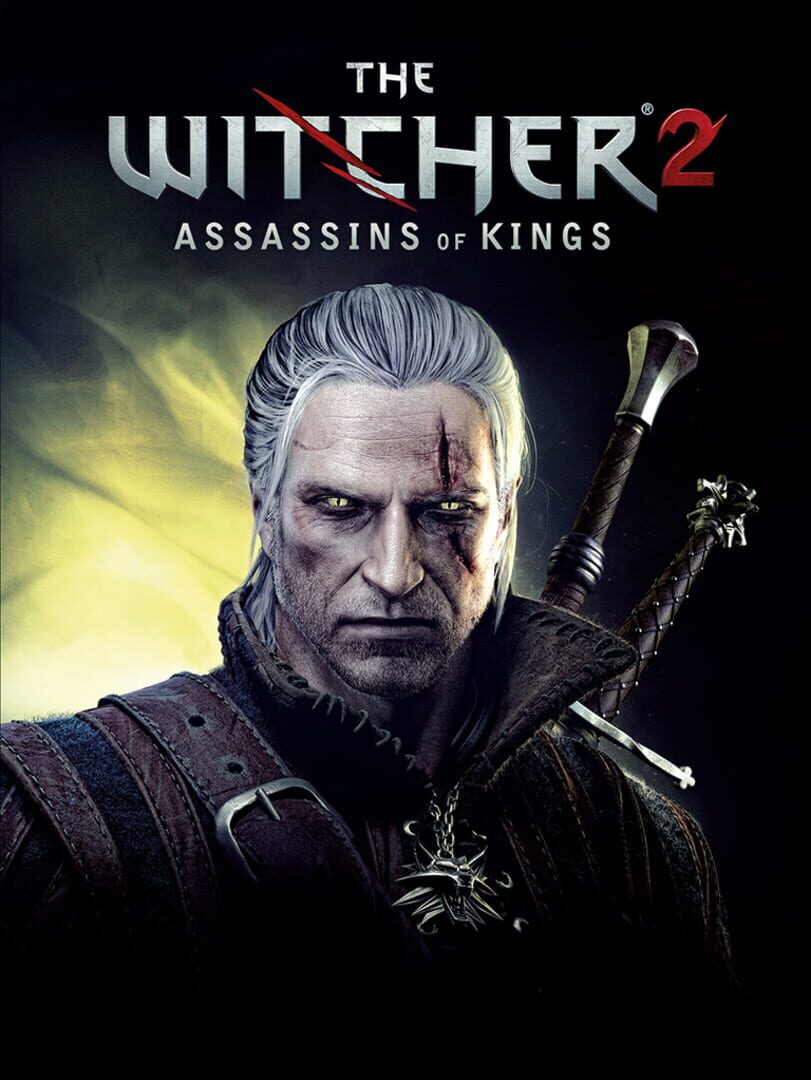
The Witcher 2: Assassins of Kings
- Developer
- CD Projekt RED
- Publisher
- CD Projekt RED
- Release Date
- May 17, 2011
- Platforms
- PC (Microsoft Windows) · Xbox 360 · Mac · Linux
- Genres
- Role-playing (RPG) · Adventure
You Might Also Like
Witcher 2 Story Recap: The Political Events That Shape Witcher 3
A complete Witcher 2 story recap covering the regicides, the Lodge of Sorceresses, and Nilfgaard's rise — everything you need before playing Witcher 3.
Dragon Quest: Toriyama's 10 Most Iconic Monster Designs
Explore the 10 most iconic Dragon Quest monster designs by Akira Toriyama — from the beloved Slime to the fearsome Dragovian. Here's why they endure.
Metal Slug Sound Design: The Psychology Behind the Iconic Voice
How Metal Slug's lo-fi announcer voice became a global audio trademark more recognisable than most studio logos — and the psychology that made it stick.