Metal Slug Pixel Art: Why No One Draws Like SNK?
Metal Slug's pixel art set a standard no studio has matched in 30 years. Discover how Nazca Corporation turned Neo Geo hardware into an interactive cartoon.
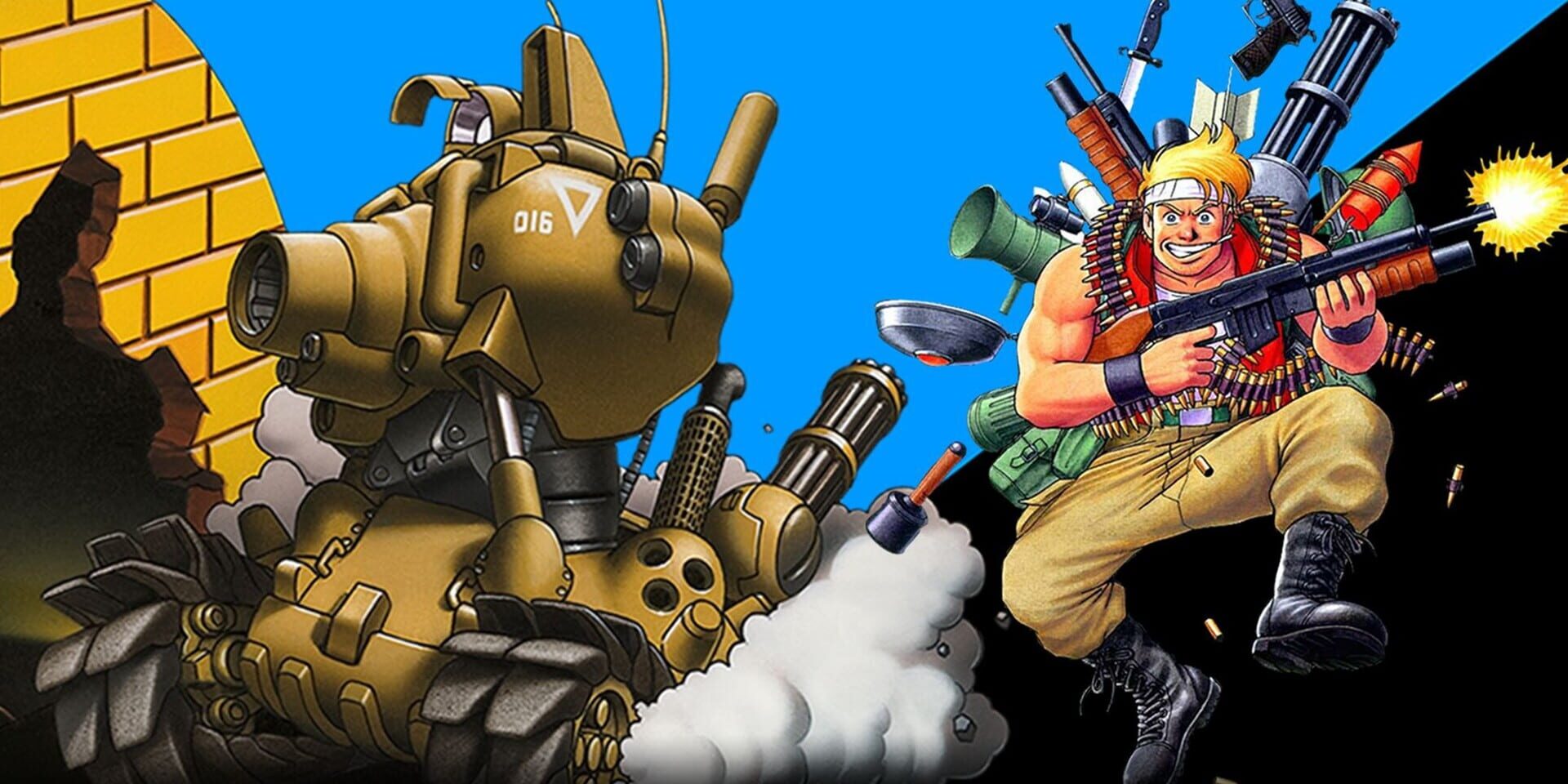
- Metal Slug (1996) features some of the most detailed hand-drawn sprite animation ever created, with frame counts that rival traditional cartoon production.
- Nazca Corporation — a team of ~30 former Irem developers — pushed the Neo Geo MVS hardware to its absolute limits using proprietary art tools and frame-by-frame craftsmanship.
- Three decades later, no modern pixel art game has fully replicated Metal Slug's combination of volume, fluidity, and expressive detail — and the reasons are economic as much as artistic.
What Makes Metal Slug's Pixel Art the Gold Standard After 30 Years?
Metal Slug is pixel art perfection — and that is not hyperbole. Released in 1996 by Nazca Corporation for the SNK Neo Geo MVS arcade system, the game delivered a level of hand-drawn sprite animation that the industry has never truly surpassed. Soldiers warm their hands over campfires with subtle, looping idle animations. Explosions bloom frame by frame in dozens of stages. Enemy tanks lurch and pivot with the weight of actual machinery. In 1996, this was jaw-dropping. In 2026, it is still studied by artists worldwide.
According to retrospectives on Creative Bloq and analyses posted on NeoGAF, what separated Metal Slug from every contemporary was sheer excess: frame counts stacked where other developers cut corners. While most arcade games of the era shipped characters with 4–8 frames per action, Metal Slug's sprites featured dozens. The result was less a video game aesthetic and more a moving cartoon — a Hayao Miyazaki film that let you hold a gun.
The secret was not magic — it was a small team of obsessive pixel artists, proprietary SNK tools, and a hardware platform powerful enough to sustain it all. Understanding why Metal Slug looks the way it does requires understanding the Neo Geo, the team behind it, and the almost irrational commitment to quality that defined every frame.

How Did Nazca Corporation Push the Neo Geo to Its Limits?
Nazca Corporation did not emerge from nowhere. Founded on May 2, 1994 in Suita, Osaka Prefecture, the studio was formed by approximately 30 former Irem employees who had previously worked on acclaimed arcade titles like In the Hunt and GunForce II. When Irem shuttered its video game division, that creative nucleus — rather than scatter — incorporated as Nazca and partnered with SNK as a subsidiary. The institutional knowledge they brought was extraordinary: these were engineers and artists who had already spent years understanding how to squeeze performance from dedicated arcade silicon.
The Neo Geo MVS was, at the time, one of the most powerful arcade boards available. Its custom Yamaha sound chip and 68000 CPU could push a staggering 380 simultaneous colours on screen, with a sprite layer system capable of rendering up to 380 sprites per scanline. SNK's proprietary art tool, known internally as Art Box, was the backbone of production — it served as what Wikipedia describes as 'the origin of all graphic images of NeoGeo games', allowing artists to work within the platform's strict palette and tile restrictions with purpose-built software. Nazca inherited and extended this pipeline.
Chief development manager Kawai and producer Takashi Nishiyama set a vision inspired explicitly by Miyazaki's animation — whimsy, weight, and warmth in every frame. Pixel artists Akio Oyabu, Kazuhiro 'Max.D' Tanaka, and others executed that vision through a multi-pass technique: broad strokes first, then pixel-level detail, then dithering, then a final finishing pass done one pixel at a time. The backgrounds — which on the Neo Geo hardware are themselves entirely composed of sprites — received the same meticulous treatment as the characters.

What Makes Metal Slug's Animation So Exceptionally Detailed?
The genius of Metal Slug's animation is in the details you almost miss. Enemy soldiers do not just stand still — they shift their weight, scratch their heads, and crouch nervously when they hear the player approaching. When you set one on fire, he does not simply flash red and collapse; he flails in a multi-frame panic sequence that is simultaneously horrifying and cartoonishly funny. These idle and reaction animations serve no gameplay purpose. They exist purely because Nazca's artists cared enough to put them there.
Explosions in Metal Slug are a masterclass in timing and volume. Each detonation cycles through a carefully staged sequence — the flash, the bloom, the smoke dissipation — all drawn by hand at a resolution that rewards pause-frame scrutiny. As noted in analyses by Linclo Games and 3rd Voice Gaming, the original Nazca trilogy uses a technique where the most dramatic motion happens inside the sprite boundary: characters remain spatially stable while internal pixel-level movement creates the illusion of fluid life. This is animation economy at its most sophisticated.
The mechanical vehicles are perhaps the most impressive achievement. The SV-001 Metal Slug tank — the game's namesake — moves with a hydraulic authenticity that most developers would never budget for. Its turret rotates independently of the body. The tracks visibly churn. When it takes damage, panels buckle frame by frame before the final catastrophic explosion. These are not just visual flourishes — they communicate weight, consequence, and world-building without a single word of dialogue.

Why Can't Modern Studios Replicate Metal Slug's Pixel Art Quality?
The short answer is economics. Metal Slug's animation density would cost a modern independent studio millions of dollars and years of production time. In 1996, Nazca's team of specialists produced this work with focused constraints — a single platform, a defined sprite resolution, and no expectation of 3D alternatives. Today, pixel art games are niche by choice, built by small teams who cannot justify the frame counts of a Neo Geo arcade board even if they wanted to. The few studios that try — Dotemu's recent Metal Slug Tactics among them — acknowledge the challenge openly.
The indie revival of pixel art has produced remarkable work: Shovel Knight, Blasphemous, Axiom Verge. But as Creative Bloq noted in its 30th anniversary retrospective, these games succeed at a different register. They evoke the era; they do not replicate the excess. Metal Slug remains singular because it was born from an industrial context — arcade hardware, a specialized team, SNK's deep pockets — that simply does not exist anymore. The game is not just a product of craft. It is a product of a specific moment in gaming history that closed the moment 3D became dominant.
The original Metal Slug is available on modern platforms via SNK's digital storefronts and the SNK 40th Anniversary Collection. Emulation-accurate versions let you pause and frame-advance through any animation sequence — an invaluable resource for pixel artists studying the game's techniques. The IGDB entry and SNK's official channels also host high-resolution screenshots for reference.
Official Trailer
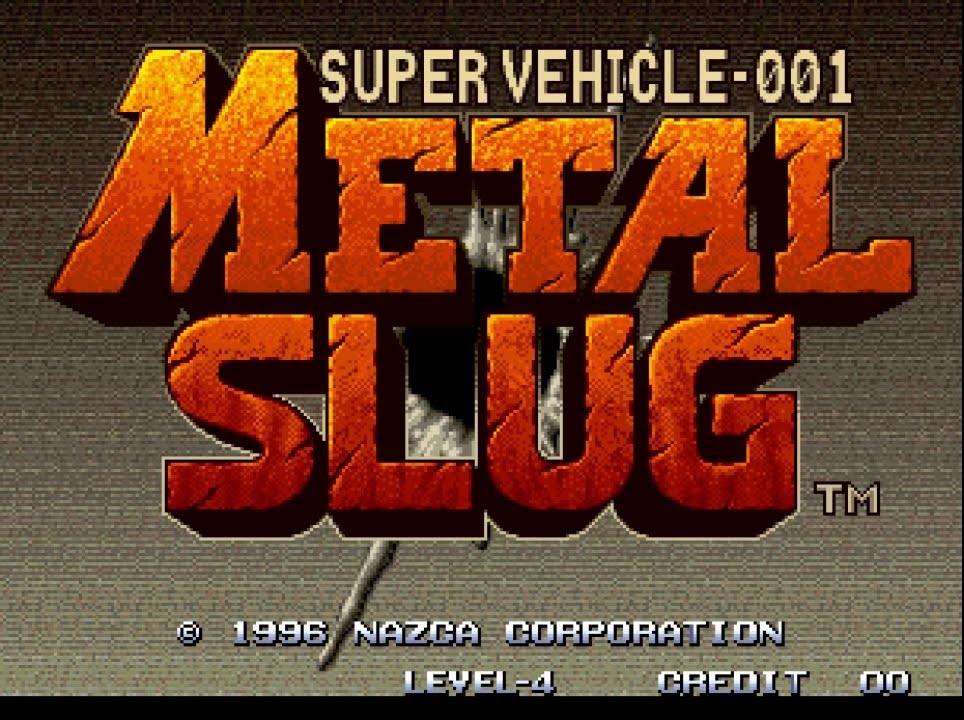
Click to load — YouTube (Google) cookies will be set

Metal Slug
- Developer
- Nazca Corporation
- Publisher
- SNK
- Release Date
- April 19, 1996
- Platforms
- Arcade · Neo Geo AES · Neo Geo CD · PlayStation Portable · Wii · PC · iOS · Android
- Genres
- Run and Gun · Platform · Arcade
You Might Also Like
Metal Slug Sound Design: The Psychology Behind the Iconic Voice
How Metal Slug's lo-fi announcer voice became a global audio trademark more recognisable than most studio logos — and the psychology that made it stick.
Metal Slug: The Story of the Geniuses Behind the Game
How ex-Irem rebels founded Nazca Corporation, built a tank-only prototype, and created Metal Slug — the run-and-gun masterpiece that defined SNK's Neo Geo legacy.
Dragon Quest: Toriyama's 10 Most Iconic Monster Designs
Explore the 10 most iconic Dragon Quest monster designs by Akira Toriyama — from the beloved Slime to the fearsome Dragovian. Here's why they endure.