Metal Slug: The Story of the Geniuses Behind the Game
How ex-Irem rebels founded Nazca Corporation, built a tank-only prototype, and created Metal Slug — the run-and-gun masterpiece that defined SNK's Neo Geo legacy.
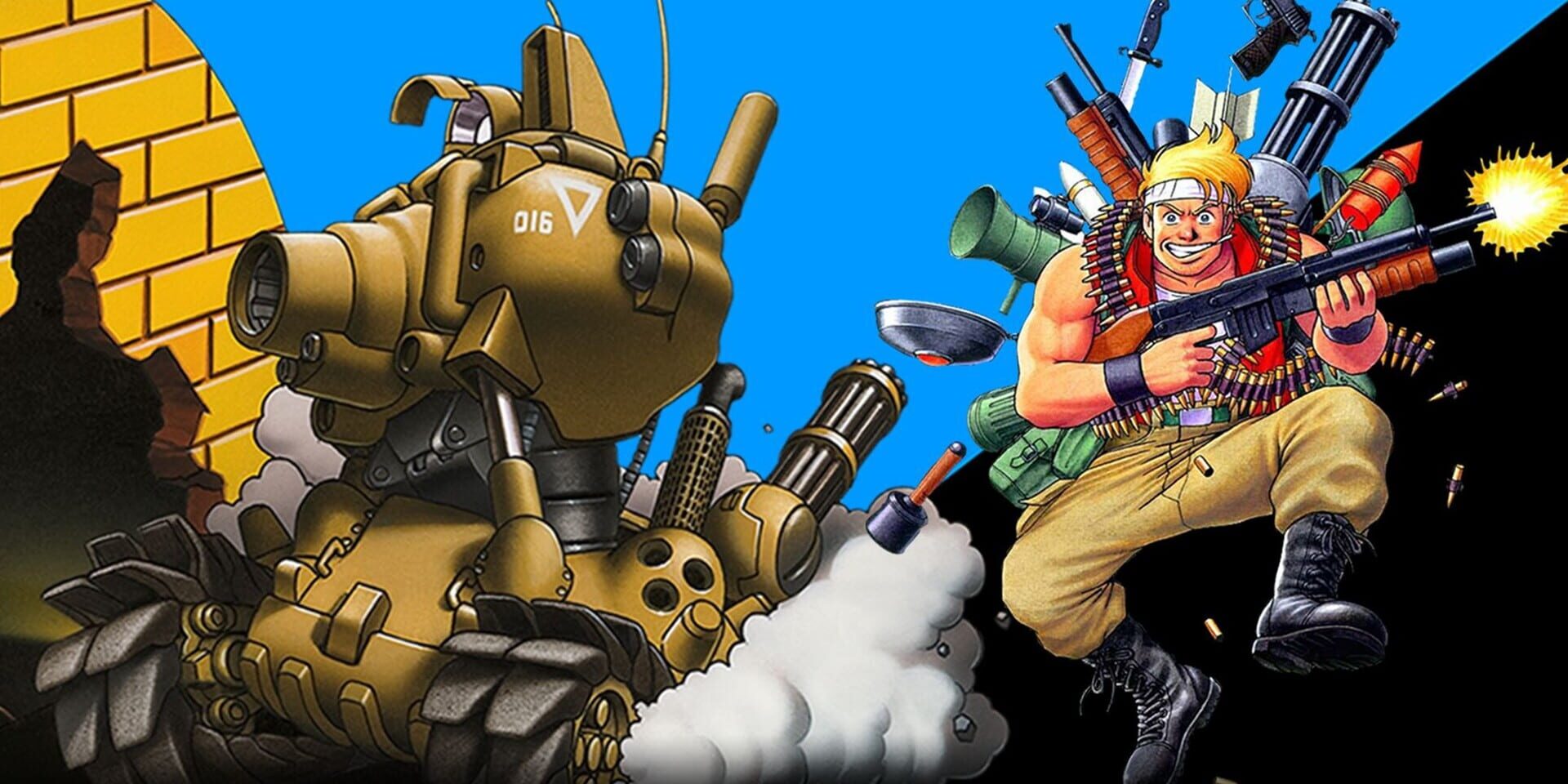
- Metal Slug was created by ex-Irem developers who left the company in 1994 and founded Nazca Corporation, drawing on their experience with R-Type and GunForce II.
- The original game had no human soldiers — the tank was the only playable character, but dismal location-test results forced a last-minute redesign that introduced Marco and Tarma.
- SNK acquired Nazca after seeing the game's potential, turned it into the flagship title of the Neo Geo, and the series survived SNK's 2001 bankruptcy through fan preservation and countless re-releases.
What Is the True Origin Story of Metal Slug?
Metal Slug is one of the most iconic run-and-gun arcade games ever made — but its origin is a story of rebellion, improvisation, and last-minute genius. The game was developed by Nazca Corporation, a small studio founded in 1994 by a group of programmers and designers who had walked away from Irem, the Japanese arcade giant best known for R-Type. When they left, they carried with them decades of technical expertise, a hunger to prove themselves, and the seeds of what would become a franchise that still resonates thirty years later.
Released on April 19, 1996, for SNK's Neo Geo MVS arcade board, Metal Slug: Super Vehicle-001 blended frenetic shooting action with hand-drawn pixel art of extraordinary quality. According to Wikipedia's detailed game history, the title sold so well and generated such enthusiastic player responses in arcades worldwide that SNK immediately recognised it as a system seller — and moved quickly to bring its creators under their corporate umbrella.
But before any of that could happen, a group of disgruntled developers had to walk out of Irem's offices, gamble their careers on an independent studio, and survive a near-catastrophic prototype that almost killed the project before it began. This is that story.

How Did a Team of Irem Rebels Create the Nazca Corporation?
Irem was a serious force in the Japanese arcade scene throughout the 1980s and early 1990s. The studio produced R-Type in 1987, a horizontal shoot-em-up so technically demanding and visually stunning that it set the benchmark for the genre. Many of the engineers and artists who worked on R-Type and its successors — including the GunForce series — built deep expertise in action game design at Irem. But by the early 1990s, the company's direction began to stall. As documented by the SNK Wiki and Nazca Corporation's own history, Irem's video game division became increasingly inactive during a market crisis, leaving its most talented staff frustrated and without creative direction.
In 1994, that frustration reached a breaking point. A core group of developers — led by former Irem executive Yoshihiko Kodo — resigned and founded Nazca Corporation. The name was a bold declaration of independence: they were building something monumental, something meant to last, like the famous Nazca Lines etched into the Peruvian desert. Their final project at Irem had been GunForce II, and the gameplay DNA of that title — the side-scrolling action, the vehicle mechanics, the enemy density — would flow directly into what they built next.
Nazca's first major release was Neo Turf Masters (1996), a surprisingly polished golf game that demonstrated the team's technical range. But the project that defined them — and that would change arcade history — was already in development. They called it Metal Slug: Super Vehicle-001, and at first, it wasn't quite the game the world would come to love.

Was Metal Slug Originally Just a Tank Game With No Soldiers?
Yes — and this is one of the most fascinating "what if" moments in arcade history. In its earliest form, Metal Slug was conceived purely as a tank-based shooter. Players would control the SV-001, a massive armoured vehicle, through side-scrolling stages packed with enemy infantry and artillery. The prototype even had different characters at the controls: Regular Army members Phil Gene and Michiko Nakajima, not the Marco Rossi and Tarma Roving that fans know today. The concept was ambitious, but it had a critical problem.
Location testing — the arcade industry's method of putting a prototype machine in a real arcade to measure player response — revealed the tank-only design wasn't working. Developer Kujo described the issue bluntly, as reported by the Lost Media Wiki and bitvint.com's comprehensive Metal Slug history: "It was too bulky and awkward for an action/shooting game." Programmer Shinichi Hamada confirmed that player response at location tests was poor enough that development was halted for an entire month while the team rethought the core concept.
The solution was as elegant as it was inspired: add human soldiers. Marco Rossi and Tarma Roving were introduced as playable characters who could operate independently from the tank, jump across platforms, and engage enemies on foot. The SV-001 became a power-up — a vehicle you could jump into for devastating firepower, then abandon when the situation demanded agility. This hybrid design, where the tank was a tool rather than a constraint, transformed a struggling prototype into a genre-defining experience. The iconic cry of "Heavy Machine Gun!" when players picked up a weapon upgrade was the finishing touch — a moment of pure arcade joy that players still quote thirty years later.

How Did SNK Turn Metal Slug Into a Global Arcade Phenomenon?
SNK had been watching Nazca's work with keen interest. The Neo Geo MVS was SNK's flagship arcade board — a technically powerful system capable of displaying the kind of high-resolution, richly animated sprites that made fighting games like The King of Fighters and Samurai Shodown household names in arcades. When Metal Slug arrived on the MVS in April 1996, it immediately demonstrated that the hardware could do something the company had never quite achieved before: a run-and-gun game that felt alive, warm, and almost cartoonishly expressive in every pixel.
SNK moved quickly. They acquired Nazca Corporation shortly after the first game's release, absorbing the studio's staff and intellectual property. Yoshihiko Kodo, Nazca's founder, was later appointed president of SNK itself — a remarkable rise that underlined just how much value the company placed on what the former Irem team had built. According to the Metal Slug Wiki on Fandom, SNK retained the Nazca staff to develop Metal Slug 2, Metal Slug X, and Metal Slug 3, each building on the original's formula with increasingly elaborate set-pieces, stranger enemy designs, and more creative vehicle sections.
Metal Slug 3 (2000) is widely regarded as the pinnacle of the series — a game so packed with content, secret paths, and boss variety that it remains a benchmark for the genre. By this point, the franchise had become the prestige title of the Neo Geo platform, the game you pointed to when explaining why the hardware justified its premium price. The series had sold across arcades, Neo Geo AES home consoles, and Neo Geo CD, and had built a fiercely loyal following that would prove crucial in the years that followed.
How Did Metal Slug Survive SNK's Bankruptcy and Reinvent Itself?
In 2001, SNK filed for bankruptcy — a casualty of the broader collapse of the dedicated arcade hardware market and a series of poor business decisions in the late 1990s. The original Metal Slug team, which had already been operating inside SNK for years, disbanded. Co-designer Meeher left the company after the initial bankruptcy, though he would return in 2003 as part of SNK's restructured pachislot division. It looked, for a moment, like the series might simply end.
It didn't. The intellectual property passed through several ownership changes — from the original SNK to Playmore Corporation (which rebranded as SNK Playmore and eventually back to SNK) — and the franchise survived on the strength of its fanbase and the commercial logic of re-releasing beloved classics. Metal Slug Anthology (2006) brought the first six games to PlayStation 2, PSP, and Wii, introducing the series to a new generation. Digital distribution through platforms like GOG and Steam kept the games accessible. Today, SNK continues to exploit the brand through collections and mobile adaptations, and Metal Slug: Awakening (2023) brought the franchise to mobile audiences in Asia. The original games remain among the most played titles on Neo Geo emulation platforms, a testament to the enduring quality of what the Nazca team built in a small Tokyo office more than thirty years ago.
The best way to experience the original Metal Slug trilogy is through the Metal Slug Anthology, available on Nintendo Switch, PS4, and PC via Steam and GOG. If you want the most authentic experience, the games are also available individually on Steam with online leaderboard support — 'Heavy Machine Gun' has never been more accessible.
Official Trailer
Click to load — YouTube (Google) cookies will be set
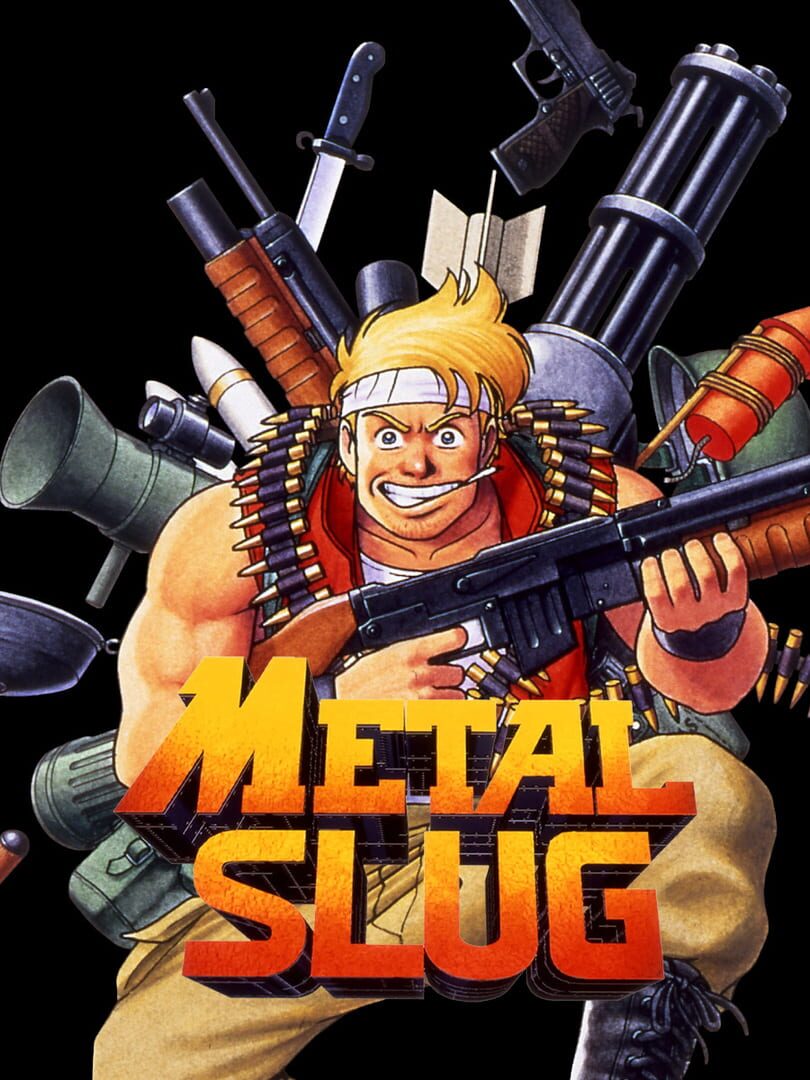
Metal Slug
- Developer
- Nazca Corporation
- Publisher
- SNK
- Release Date
- April 19, 1996
- Platforms
- Arcade · Neo Geo AES · Neo Geo CD · PlayStation 3 · PSP · Wii · PC · iOS · Android
- Genres
- Run and Gun · Shooter · Platform · Arcade
You Might Also Like
Metal Slug Sound Design: The Psychology Behind the Iconic Voice
How Metal Slug's lo-fi announcer voice became a global audio trademark more recognisable than most studio logos — and the psychology that made it stick.
Metal Slug Pixel Art: Why No One Draws Like SNK?
Metal Slug's pixel art set a standard no studio has matched in 30 years. Discover how Nazca Corporation turned Neo Geo hardware into an interactive cartoon.
Dragon Quest: Toriyama's 10 Most Iconic Monster Designs
Explore the 10 most iconic Dragon Quest monster designs by Akira Toriyama — from the beloved Slime to the fearsome Dragovian. Here's why they endure.