Helldivers 2 Major Orders Explained: How Liberation Actually Works
How Helldivers 2 Major Orders, liberation percentages, enemy resistance and difficulty really interact, with live war data and the numbers Arrowhead hasn't published.
Contents
First published. Live war data checked on 9 October 2026, around 11:15 UTC.
Major Orders are the community-wide objectives Arrowhead sets for every Helldivers 2 player at once, and planets fall or hold depending on how much damage the whole player base deals to them. That damage comes only from completed main objectives, grows with difficulty, shrinks per mission as more people play, and has to outpace each planet's hourly enemy resistance.
This explainer is built on Arrowhead's own posts on Steam, live data from the game's war feed (read through the community-run Helldivers 2 API on 9 October 2026, around 11:15 UTC) and the community wiki's Second Galactic War Mechanics page, which collects dated statements from Arrowhead staff. Arrowhead has never published a full formula, so community-derived numbers are labelled as such.
What is a Major Order?
A Major Order is a shared goal for the entire player base, shown at the top right of the pause menu above your Personal Order, a smaller daily task only you work on. GamesRadar's explainer notes that Arrowhead creates them by hand to push the story of the war, and that rewards are usually Medals, often 30 to 50 of them.
The order live on 9 October 2026 shows the format. Its briefing asks players to hold a designated planet and kill a set number of bile-producing Terminids; the feed lists the planet as Senge 23, a reward of 45 Medals and an expiry of 13 October 2026 at 13:41 UTC. Orders mix planet goals (liberate, defend, hold) with kill counts and one-off tasks, and an order can fail even when part of it succeeds, for example when one named planet is liberated but another is not.
How does liberation percentage work?
Every planet has a health pool, and the liberation percentage is simply how much of it has been removed. According to the community wiki, the base pool is 1,000,000 points and each Region on the planet adds to it: +100,000 for a Settlement, +200,000 for a Town, +400,000 for a City and +600,000 for a Mega City. That is why some planets in the live feed have pools of 1.6, 2 or even 3.2 million.
| Planet | Enemy | Health pool | Liberation | Enemy resistance per hour | Helldivers on planet |
|---|---|---|---|---|---|
| Brilliance | Terminids | 2,000,000 | 86.3% | 1.25% (25,000 points) | 23,614 |
| Alaraph | Illuminate | 1,800,000 | 35.4% | 0% | 710 |
| Omicron | Terminids | 3,000,000 | 0% | 3.33% (about 100,000 points) | 706 |
| Merga IV | Automatons | 1,000,000 | 0% | 7% (70,000 points) | 110 |
| Choepessa IV | Automatons | 3,200,000 | 0% | 0.47% (about 15,000 points) | 207 |
Brilliance shows what concentration does: with 23,614 of the 36,529 Helldivers online at the time (about 65%), it was 86.3% liberated. Omicron and Merga IV, with a few hundred players each and far higher resistance, sat at 0%.
Does difficulty matter for liberation?
Yes, a lot. Damage is generated only when a mission's main objective is completed, and the amount scales with difficulty. Since a May 2025 change, announced by Arrowhead's Baskinator and quoted on the wiki, every mission deals impact and finishing the whole operation adds a bonus on top. Discord messages from March 2026 quoted on the same page say these rules were still correct.
| Difficulty | Mission value | Operation value | Total (wiki) |
|---|---|---|---|
| 1 Trivial | 0 | 136 | 136 |
| 2 Easy | 0 | 144 | 144 |
| 3 Medium | 40 | 160 | 200 |
| 4 Challenging | 44 | 176 | 220 |
| 5 Hard | 50 | 200 | 300 |
| 6 Extreme | 58 | 232 | 348 |
| 7 Suicide Mission | 67 | 268 | 402 |
| 8 Impossible | 77 | 308 | 462 |
| 9 Helldive | 89 | 356 | 534 |
| 10 Super Helldive | 102 | 408 | 612 |
That settles a question that keeps coming up on r/Helldivers: whether rushing Difficulty 1 city operations helps as much as harder ones. On the wiki's numbers, Trivial and Easy missions produce no mission value at all, only the operation value, and a full Helldive operation is worth roughly four times a Trivial one. The wiki adds that spamming Trivial missions can even slow a planet down because of the impact modifier below. It does not separately document whether Region damage follows the same scaling.
Why does progress slow down when everyone piles in?
Each mission's value is multiplied by a Galactic Impact Modifier before it is dealt to the planet. The wiki describes it as scaling inversely with the number of missions completed in a rolling 30-minute window, which in practice tracks the share of the player base that is online and playing. At our snapshot the feed reported a modifier of 0.0298 with 36,529 players online.
Two consequences follow. A rush of quick missions does not cheat the system, because the modifier drops to compensate. And what counts is the proportion of players committed to a planet rather than the raw number. The wiki also notes that only missions started by a host count, so kicking players and re-forming a squad mid-mission creates no extra damage. Cheat mods that tamper with the war directly are another matter: Arrowhead cited them when it switched Helldivers 2 from GameGuard to Easy Anti-Cheat on 20 October 2026.
What is enemy resistance?
Enemy resistance is the planet healing itself: a fixed percentage of its total health regenerated every hour. Merga IV's 7% means the enemy wins back 70,000 points an hour, so the planet only moves if the Helldivers on it out-damage that figure. Arrowhead Support clarified in February 2025, as relayed on the wiki, that resistance has nothing to do with mission difficulty: a high-resistance planet is not harder to play, only slower to take.
Liberation, defence and gambits: what's the difference?
| Campaign | Timer | How it works |
|---|---|---|
| Liberation | None | Bring the planet's health to zero; fails if no supply line to a Super Earth planet remains |
| Defence | 24 hours; 48 with a Mega City or Megafactory (24 if the Jet Brigade attacks); 48 on Magma, Deciduous/Autumn Forest and Oasis planets | Separate pool, generally far below 1,000,000, with no regeneration; a lost planet restarts liberation at 0% |
| Urgent liberation | Timed | A defence in reverse: take an enemy planet before the deadline |
| Gambit | The defence timer | Liberating the planet an attack comes from ends that defence in Super Earth's favour |
| High-priority | Varies | Story campaigns with very high resistance that drops at milestones if most players join the Major Order |
Because defences do not regenerate, every completed mission on a defended planet sticks, which makes them the safest place for limited playtime. Gambits are the exception to watch for: the wiki warns they are not always viable when the source planet has a big health pool or high resistance.
How do sieges and supply lines work?
Attacks travel along supply lines (warp links) between neighbouring planets of different factions, shown as arrows on the war map, and a liberation campaign can be launched from any connected Super Earth planet. If an enemy planet is completely surrounded by Super Earth territory, its resistance turns negative and it slowly liberates itself: about 0.5% per hour on the wiki's figures, applied automatically since around 16 June 2025 after previously being handled by hand.
That is the point behind the recurring "learn to siege" threads on r/Helldivers: encircling a planet takes it without anyone playing there, while liberating planets one by one in a line costs time a Major Order may not have. The same rule cuts the other way, since enemy factions can only attack from planets they own.
How do Regions and cities change the maths?
Regions (settlements, towns, cities and Mega Cities) have their own resistance, separate from the planet's. According to the wiki, liberating one deals damage to the planet equal to 1.5 times the Region's health, some Regions only unlock as liberation progresses, and in defences more Regions become vulnerable as the clock runs down. That is why Major Order how-to posts urge players to complete operations in the named cities rather than simply diving onto the planet.
What is Arrowhead changing about campaigns?
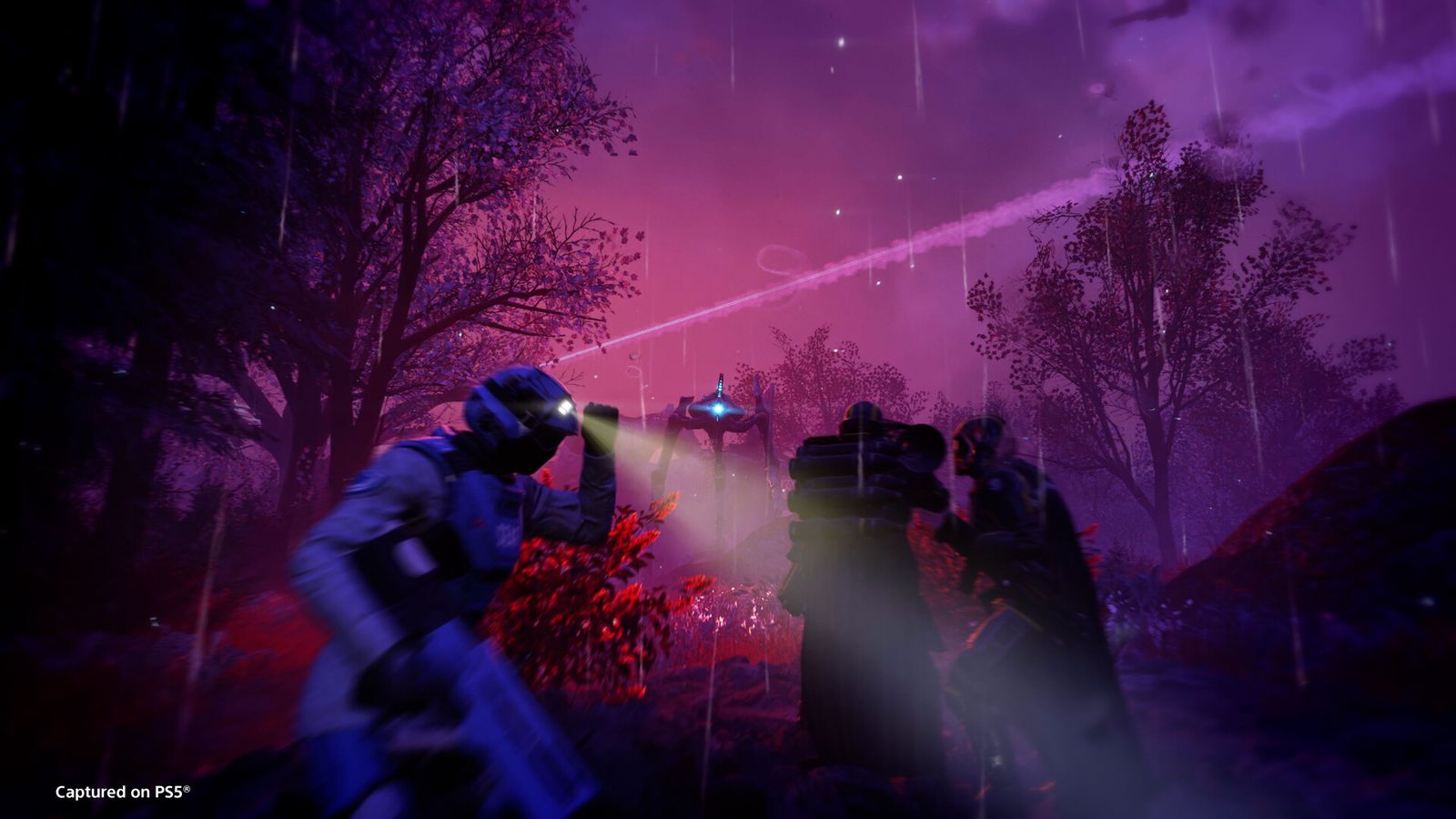
In a Steam post on 25 September 2026 looking back at Devoid of Liberty, creative director Mikael Eriksson said the two most common requests were more time in the Void and community choices that shape campaign endings in impactful ways. Both depend on how campaigns are structured (how many phases they run, how long content stays live and how much room the game masters have to react), and that structure is what Arrowhead is iterating on for the next big update.
Eriksson also said stability stays the priority between updates, after a launch that took two follow-up patches (7.0.1 on 17 August and 7.0.2 on 25 August) to fix crashes. The Void itself already broke the old pattern: Arrowhead's deep dive of 18 August says operations there use several randomised primary objectives instead of a more linear sequence. Treat everything above as the rules of the current war; if the campaign structure changes, this guide will be updated.
How can you help a Major Order the most?
- Play on the planet the order names: missions elsewhere do nothing for it.
- Pick the highest difficulty your squad can reliably clear, since a failed main objective deals no damage.
- Finish the whole operation to collect the bonus impact.
- Weigh resistance against player count, and favour timed defences, which do not regenerate.
- On city planets, follow the cities or Regions the order points to.
New Helldivers 2 guides will be collected on our Helldivers 2 hub, which is the place to start for anything else about the game.
FAQ
What is a Major Order in Helldivers 2?
A community-wide objective Arrowhead sets for all players, such as liberating, defending or holding planets or reaching kill counts. It appears at the top right of the pause menu, and completing it usually pays Medals to everyone; the order live on 9 October 2026 offers 45.
Does difficulty affect liberation in Helldivers 2?
Yes. According to the community wiki, mission impact scales with difficulty: a full Helldive operation is worth roughly four times a Trivial one, and Trivial or Easy missions add value only when the whole operation is completed.
Why isn't liberation going up when lots of people are playing?
Planets regenerate a fixed percentage of their health every hour (enemy resistance), and each mission's impact shrinks as more people play. If too small a share of active players is on that planet, regeneration cancels out their damage.
What happens if a defence campaign fails?
The planet falls to the attacking faction and, per the community wiki, its liberation campaign restarts at 0%. Defences normally last 24 hours, or 48 hours on planets with a Mega City or Megafactory and on Magma, Deciduous/Autumn Forest and Oasis planets.
Do sieges work in Helldivers 2?
Yes. The community wiki says a planet completely surrounded by Super Earth territory gets negative resistance and liberates itself at about 0.5% per hour, a process that has been automatic since around June 2025.
Latest Helldivers 2 news
Game hub
Helldivers 2 Drops GameGuard for Easy Anti-Cheat Today: What Changes for PC Players
Arrowhead is swapping nProtect GameGuard for Easy Anti-Cheat in Helldivers 2 today. What it means for mods, Steam Deck and PC specs, and why it took this long.
- Launching Devoid of Liberty: A Look Back (25 September 2026) — Arrowhead Game Studios via Steam
- Helldivers 2: A deep dive into the Illuminate Void (18 August 2026) — Arrowhead Game Studios via Steam
- Helldivers 2 on Steam — Steam
- Second Galactic War Mechanics (last edited 13 August 2026) — Helldivers Wiki (community)
- Helldivers 2 community API (war feed, checked 9 October 2026) — helldivers-2 community project
- Helldivers 2 Major Orders and how they work explained — GamesRadar+
- Does difficulty matter when completing city operations? — r/Helldivers